Empathy and Self-Awareness in Difficult Conversations, with Dayne Whitehurst
Episode 469

On this episode of Destination on the Left, I talk with communication and leadership specialist Dayne Whitehurst, and author of “Empathy Impact: The Wild Effects of Kindness in Action”. She explains why communication is central to building collaborations, developing relationships, and driving sales. Dayne also explains how personal triggers can get in the way of our communications and provides strategies for identifying and pushing past those triggers.
What You Will Learn in This Episode:
- How Dayne became an expert in communication and de-escalation
- How recognizing and addressing triggers helps move conversations and collaborations forward
- What “experiencemanship” means and why it matters
- How self-awareness forms the foundation of strong leadership and partnerships
- Why habitual phrases with negative connotations can unconsciously undermine our intentions, and what to say instead
- How to lead difficult conversations with appreciation and validation to create a safe environment and produce positive outcomes
- Strategies Dayne recommends for building empathy in professional relationships and inviting authentic, supportive dialogue
Building Trust Through “Experiencemanship”
The tourism industry is fundamentally built on relationships, whether it’s with team members, clients, or partners. For Dayne the secret to success isn’t just salesmanship, but what she calls “experiencemanship”—the art of prioritizing the experience and needs of the other person over your own agenda.
Effective leaders and sales professionals focus on what matters to the customer or partner, rather than getting bogged down in their own organization’s goals. This mindset is especially crucial when communication channels are limited to calls, emails, or virtual meetings, settings where body language and other cues can be lost.
Recognizing and Navigating Triggers
One of the biggest obstacles to effective communication isn’t always what’s said, but what’s felt. Dayne points out that we all bring triggers and unconscious biases into our interactions, our past experiences, expectations, and interpretations that color the way we hear and respond to others.
Consider those moments of frustration, when a colleague misses a deadline, or a collaborator isn’t as engaged as we’d like. Instead of spiraling into negative assumptions, Dayne encourages people to ask themselves if you know their whole story? Because often when people don’t show up as we’d expect, it’s a reflection of their stress or challenges, not about us at all. Becoming aware of these internal triggers and learning to step back is a crucial step to letting go of the need to control the outcome of every interaction.
The Power of Empathy and Self-Awareness
Empathy isn’t just for the benefit of others, it’s also a practice of giving ourselves grace and stepping out of the cycle of reactivity. By pausing to consider another’s perspective, asking what might be going on behind the scenes, and validating their experience, we transform difficult conversations into opportunities for real connection.
Self-awareness is key here. Recognizing your own default responses, strengths, and limitations—such as the tendency to “do it all” or react defensively, enables you to respond thoughtfully rather than reflexively. This makes you not only a better communicator but a more effective team player and leader.
Navigating Difficult Conversations
Difficult conversations are inevitable, especially in more tricky collaborations where not everyone can give equally. Dayne advises people to always begin with genuine appreciation, thank their partner for raising their perspective, recognize their efforts, and approach the conversation with openness rather than defensiveness.
Offer validation by reflecting back their feelings or experience, and only express your own point of view if it’s constructive for the partnership. This approach turns conflict into an opportunity for growth rather than a battleground for proving a point.
Resources:
- Website: www.Daynewhitehurst.com
- Instagram: https://www.instagram.com/daynewhitehurst/
- LinkedIn: https://www.linkedin.com/in/Dayne-whitehurst/
We value your thoughts and feedback and would love to hear from you. Leave us a review on your favorite streaming platform to let us know what you want to hear more of. Here is a quick tutorial on how to leave us a rating and review on iTunes!
Related Podcasts






Collaboration Toolkit
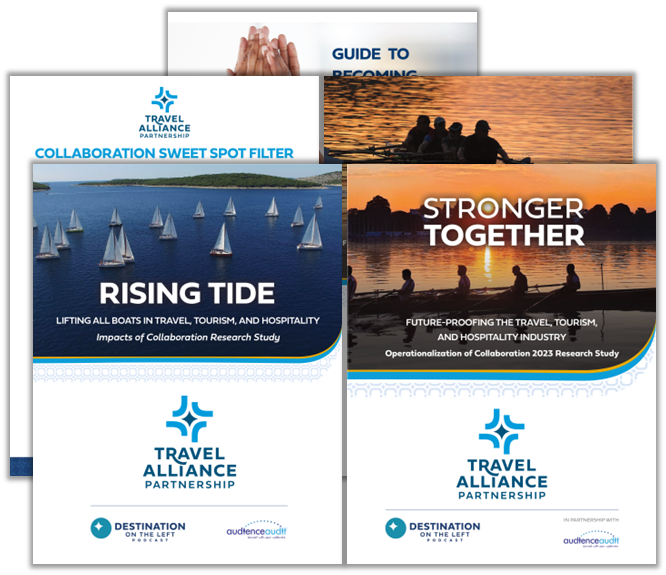
Our first research study confirmed that collaboration is a constant in the travel, tourism and hospitality industry. It is not a matter of if, but when and how, organizations will collaborate together. Our latest study reveals how organizations are putting collaboration into operation and how they are setting up systems and processes so that collaboration becomes a strategic part of the organization.
"*" indicates required fields