Community Conversation: Strengthening Tourism Through Advocacy
Episode 488

On this episode of Destination on the Left, I host a special Community Conversation featuring Patrick Kaler, President & CEO of Visit Buffalo Niagara; Tony Snell-Rodriguez, Director of Community Engagement & Inclusion at Visit Milwaukee; Steven Coyle, Director of Government Relations for Transportation Policy at the American Bus Association; and Hillarie Logan-Dechene, Deputy Director of The Wild Center. Together, they explore the many dimensions of advocacy in the tourism industry, from legislative engagement and community partnerships to storytelling, relationship building, and cross-sector collaboration. Their conversation demonstrates that effective advocacy isn’t just about influencing policy—it’s about creating trust, building authentic partnerships, and helping communities understand tourism’s value as a driver of economic growth and quality of life.
What You Will Learn in This Episode:
- Why advocacy extends far beyond government relations and begins with building authentic relationships
- How destination organizations, attractions, and industry associations are using collaboration to strengthen tourism’s voice
- What role storytelling plays in helping elected officials, residents, and stakeholders understand tourism’s economic impact
- How community engagement and resident sentiment are becoming key measures of destination success
- Why partnerships across sectors create stronger advocacy efforts and more resilient communities
- How research, data, and personal stories work together to influence decision-makers
- What practical steps tourism professionals can take to become stronger advocates within their own communities
Advocacy Begins with Relationships
Throughout the conversation, one message rises above the rest: successful advocacy starts long before asking for support. Whether working with elected officials, community organizations, business leaders, or residents, each panelist emphasizes that trust is built through consistent relationships, active listening, and genuine collaboration.
Rather than approaching advocacy as a series of requests, the panel explores how tourism organizations can position themselves as community partners. By understanding shared priorities and working toward mutual goals, destinations are able to demonstrate that tourism benefits far more than visitors—it strengthens local economies, supports small businesses, creates jobs, and enhances quality of life for residents.
Using Stories and Data to Demonstrate Tourism’s Value
While economic impact numbers remain an essential advocacy tool, the panel discusses why statistics alone are rarely enough. Effective advocacy combines measurable data with compelling human stories that help decision-makers understand tourism’s real-world impact.
The guests share examples of how visitor spending supports local businesses, creates employment opportunities, reduces the tax burden for residents, and generates long-term community investment. They also explore how personalized examples—from small business testimonials to resident feedback—can transform large economic figures into meaningful stories that resonate with legislators, community leaders, and stakeholders alike.
Building Stronger Destinations Through Cross-Sector Collaboration
One of the strongest themes throughout the discussion is the importance of looking beyond traditional tourism partnerships. The panel encourages organizations to collaborate with museums, transportation providers, nonprofits, healthcare institutions, educational organizations, chambers of commerce, neighborhood groups, and local businesses to build stronger advocacy networks.
The guests share how these relationships not only strengthen individual organizations but also create more resilient destinations capable of addressing community priorities together. Whether developing new programs, supporting accessibility initiatives, attracting meetings and events, or advocating for infrastructure investments, they demonstrate that tourism is most successful when it is viewed as a shared community asset. By embracing collaboration over competition, destinations can amplify their impact, strengthen public trust, and ensure tourism continues to deliver lasting benefits for visitors and residents alike.
Resources:
Patrick Kaler
- Website: https://visitbuffalo.com/
- LinkedIn: https://www.linkedin.com/in/patrickkaler/
Tony Snell-Rodriguez
- Website: https://www.visitmilwaukee.org/
- LinkedIn: https://www.linkedin.com/in/tony-snell-rodriguez/
Steven Coyle
- Website: https://www.buses.org/
- LinkedIn: https://www.linkedin.com/in/steventcoyle/
Hillarie Logan-Dechene
- Website: https://www.wildcenter.org/
- LinkedIn: https://www.linkedin.com/in/hillarie-logan-dechene-2bb8aa18/
We value your thoughts and feedback and would love to hear from you. Leave us a review on your favorite streaming platform to let us know what you want to hear more of. Here is a quick tutorial on how to leave us a rating and review on iTunes!
Related Podcasts





Collaboration Toolkit
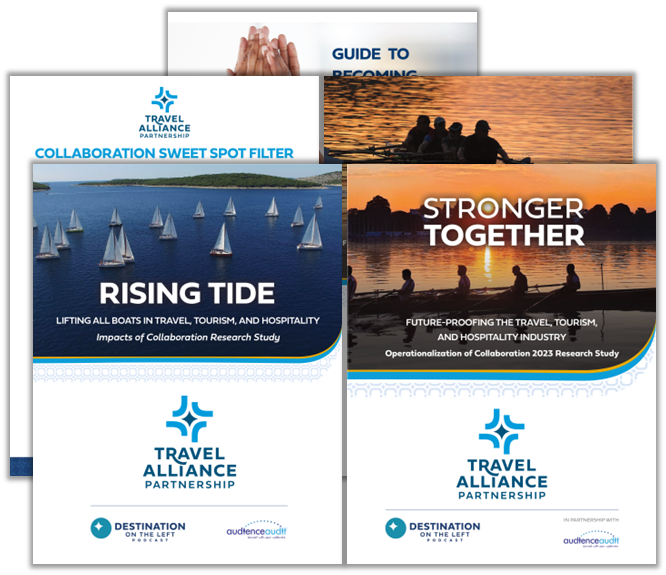
Our first research study confirmed that collaboration is a constant in the travel, tourism and hospitality industry. It is not a matter of if, but when and how, organizations will collaborate together. Our latest study reveals how organizations are putting collaboration into operation and how they are setting up systems and processes so that collaboration becomes a strategic part of the organization.
"*" indicates required fields