Connecting Community, Nature, and Visitors at Cayuga Lake, with Astrid Jirka
Episode 473

On this episode of Destination on the Left, I talk with Astrid Jirka, Director of Tourism Initiatives at Discover Cayuga Lake. We discuss the difference between sustainable tourism and ecotourism, and Astrid shares more about the evolution of Discover Cayuga Lake from a community-focused organization into a tourism attraction. We also discuss the importance of being intentional and authentic in your messaging about your sustainable tourism goals and initiatives.
What You Will Learn in This Episode:
- How Astrid’s professional journey, from international travel to study abroad initiatives, shaped her passion for sustainable tourism
- What distinguishes ecotourism from broader sustainable tourism practices
- How Discover Cayuga Lake evolved from a community-focused educational organization into an attraction that prioritizes local access and environmental education
- What strategies Astrid and her team use to ensure that tourism revenue directly benefits the local community
- Why being intentional and authentic is essential when communicating sustainable tourism initiatives, and what pitfalls to avoid in messaging
- How Discover Cayuga Lake is planning for a greener future by using electric boats to minimize environmental impact
- The advice Astrid offers to travelers and tourism operators on making conscious, community-focused, and sustainable choices
From the Community Inward
Many tourism attractions begin as external draws, building a product to entice outsiders and then, maybe, finding ways to circle back and benefit locals. Discover Cayuga Lake’s origin story stands this model on its head. As Astrid explains, the nonprofit was founded as more than a cruise operator, it’s a mission-driven initiative to connect residents with the natural wonder of Cayuga Lake and its surroundings.
The organization started with local summer camp programming and environmental education for children, long before tourism was a central focus. This community-first approach shines through ongoing educational initiatives like the Floating Classroom, which brings local schoolchildren onto the lake to experience and understand watershed ecology, often for the first time.
Turning Tourism Dollars Into Community and Conservation Wins
A defining feature of Discover Cayuga Lake’s business model is its use of earned tourism revenue to underwrite community access and environmental education. Tourists pay for enjoyable and informative cruises, then their dollars directly fund opportunities for local kids and support for the broader community.
This integrated revenue model is possible and effective precisely because the organization operates as a nonprofit and is rooted in local partnerships and grant support. “We take that revenue, and we turn it over for community benefits and also to help essentially take care of the natural environment, which is the ultimate goal,” says Astrid.
Authentic Leadership in Destination Stewardship
We also discuss the necessity of authenticity and intentionality, and building programs that genuinely support locals, communicate meaningfully with visitors, and ensure that sustainability isn’t just a surface-level message, but something deeply woven into every aspect of the organization.
Resources:
We value your thoughts and feedback and would love to hear from you. Leave us a review on your favorite streaming platform to let us know what you want to hear more of. Here is a quick tutorial on how to leave us a rating and review on iTunes!
Related Podcasts





Collaboration Toolkit
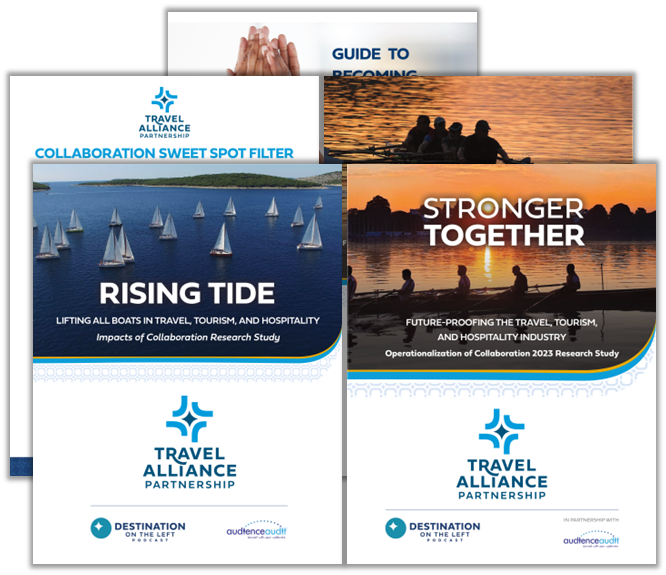
Our first research study confirmed that collaboration is a constant in the travel, tourism and hospitality industry. It is not a matter of if, but when and how, organizations will collaborate together. Our latest study reveals how organizations are putting collaboration into operation and how they are setting up systems and processes so that collaboration becomes a strategic part of the organization.
"*" indicates required fields