Building Culinary and Agritourism Through Collaboration: Conversations from the Taste of Place Summit
Episode 487

On this episode of Destination on the Left, we bring you Part 2 of our Roadshow series recorded live at the 2026 Taste of Place Summit in Edmonton, Alberta. Hosted by the Culinary Tourism Alliance in partnership with Explore Edmonton, the Summit brought together destination leaders, economic development professionals, and tourism organizations exploring how culinary tourism can strengthen local economies and create more distinctive destination identities.
Through conversations with Ellen Walker-Matthews, Elaine Zedack, Eiblis Doherty, Ceri Chong, and Bryanna Kumpula-Yung, we explore how collaboration serves as the foundation for successful culinary tourism, connecting producers, businesses, communities, and visitors into experiences that are greater than the sum of their parts.
In this episode, you’ll hear from these extraordinary leaders:
- Ellen Walker-Matthews: https://www.linkedin.com/in/ellen-walker-matthews-6951ab4/
- Elaine Zedack: https://www.linkedin.com/in/elaine-zedack/
- Eiblis Doherty: https://www.linkedin.com/in/eiblis-doherty/
- Ceri Chong: https://www.linkedin.com/in/cerij/
- Bryanna Kumpula-Yung: https://www.linkedin.com/in/bryannakumpula/
Collaboration Is the Foundation of Culinary Tourism
One of the strongest themes throughout these conversations is that successful culinary tourism rarely happens in isolation. While exceptional farms, restaurants, and producers may draw visitors on their own, destinations create lasting impact when they intentionally connect those individual experiences into a cohesive visitor journey.
Ellen Walker-Matthews shares how the Thompson Okanagan Tourism Association views culinary and agritourism as foundational to its destination strategy. Through readiness programs, partnerships between operators, and collaborative experience development, the region is helping visitors understand not only where food comes from, but also the relationships between farms, vineyards, Indigenous foodways, and the landscape itself. Across the episode, guests demonstrate how destination organizations can act as conveners, creating opportunities for businesses to work together in ways that benefit both visitors and local communities.
Food Creates a Stronger Sense of Place
Beyond great meals, culinary tourism serves as a powerful storytelling tool that helps destinations express their identity. Elaine Zedack explains how Pittsburgh uses food to celebrate its distinct neighborhoods, immigrant heritage, and blue-collar history while embracing the city’s continued evolution. Local food experiences become a form of placemaking, allowing visitors to better understand the people and cultures that have shaped a destination over time.
Ceri Chong shares a similar approach in Richmond, British Columbia, where the destination’s culinary story is built around Asian dining, fresh seafood, and local agriculture. Through events, partnerships with fishers and restaurants, and immersive waterfront experiences, Tourism Richmond is creating opportunities for visitors to engage directly with the people and industries that define the community. These conversations reinforce that food is one of the most accessible ways to experience the character and heritage of a place.
Creating the Conditions for Local Businesses to Thrive
Several guests emphasize that one of the most valuable roles destination organizations can play is helping local businesses succeed together rather than independently. Eiblis Doherty describes her role as a facilitator, connecting operators, encouraging collaboration, and helping businesses develop visitor-ready experiences that might not happen without someone bringing the right people together.
Bryanna Kumpula-Yung expands on this idea by sharing how Leduc County is investing in networking opportunities, food trails, business education, and a new local food hub that makes it easier for producers, restaurants, and consumers to connect. Rather than focusing solely on marketing, these initiatives strengthen the local ecosystem behind the visitor experience. Together, the guests demonstrate that sustainable culinary tourism depends on building relationships, removing barriers, and creating the infrastructure that allows communities, businesses, and destinations to grow together.
Resources:
Ellen Walker-Matthews
Website: https://www.totabc.org/
LinkedIn: https://www.linkedin.com/in/ellen-walker-matthews-6951ab4/
Elaine Zedack
Website: https://www.visitpittsburgh.com/
LinkedIn: https://www.linkedin.com/in/elaine-zedack/
Eiblis Doherty
Website: https://www.strathcona.ca/tourism/
LinkedIn: https://www.linkedin.com/in/eiblis-doherty/
Ceri Chong
Website: https://www.visitrichmondbc.com/
LinkedIn: https://www.linkedin.com/in/cerij/
Bryanna Kumpula-Yung
Website: https://www.leduccountybusiness.com/
LinkedIn: https://www.linkedin.com/in/bryannakumpula/
We value your thoughts and feedback and would love to hear from you. Leave us a review on your favorite streaming platform to let us know what you want to hear more of. Here is a quick tutorial on how to leave us a rating and review on iTunes!
Related Podcasts





Collaboration Toolkit
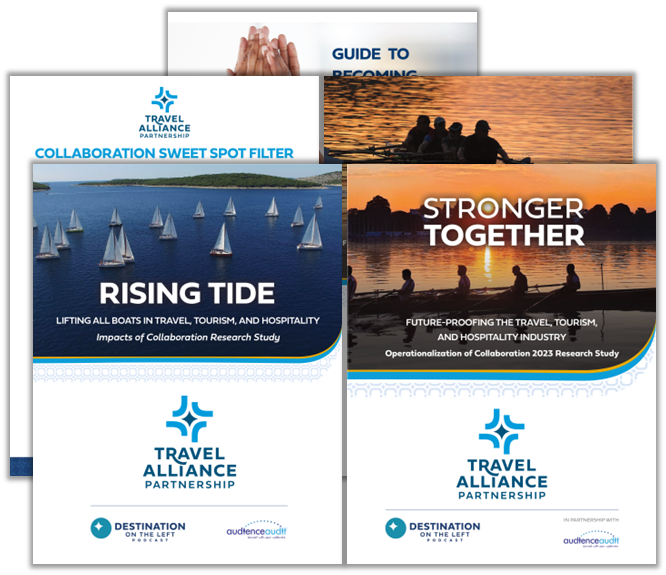
Our first research study confirmed that collaboration is a constant in the travel, tourism and hospitality industry. It is not a matter of if, but when and how, organizations will collaborate together. Our latest study reveals how organizations are putting collaboration into operation and how they are setting up systems and processes so that collaboration becomes a strategic part of the organization.
"*" indicates required fields