Developing Air Routes Through Data, Strategy, and Collaboration, with Siobhan Chrétien
Episode 504

On this episode of Destination on the Left, I talk with Siobhan Chrétien, a destination marketing and route development expert at Development Counsellors International (DCI). Drawing on nearly 20 years of experience in destination marketing, Siobhan shares how destinations and regional airports can make a compelling business case for new air service. We discuss the importance of data-driven strategy, long-term airline relationships, and collaboration among airports, destination marketing organizations, and local tourism partners. Siobhan also explores emerging travel trends and how destinations can communicate their unique value to airlines while creating more opportunities for both visitors and residents.

What You Will Learn in This Episode:
- How destinations and regional airports can use data and market analysis to build a compelling case for new air service
- Why understanding airline priorities, route profitability, and the right carrier is essential to successful route development
- How collaboration among airports, DMOs, and local tourism stakeholders can strengthen a destination’s appeal to airlines
- What regional travel trends, including domestic travel, business travel, and shorter-haul flights, mean for smaller markets
- How creative marketing, loyalty programs, and targeted promotions can help airlines and destinations reach new audiences
- Why packaging bookable travel experiences and coordinating with industry partners can help turn interest in a destination into demand
- How destinations can build lasting airline relationships through patience, shared investment, and a clear understanding of their unique strengths
Building a Business Case for Regional Air Service
Route development involves much more than convincing an airline to add a destination to its network. As Siobhan explains, airlines make decisions based on profitability, passenger demand, and how a potential route fits into their broader network. Destinations need to understand those priorities and translate their own strengths into a clear business case supported by data. That means identifying where visitors are coming from, understanding underserved markets, and demonstrating why a community has the potential to support new or expanded service.
For regional airports, this process begins with bringing the right people together. Airports, destination marketing organizations, and local stakeholders can work collaboratively to share market intelligence, communicate the destination’s unique selling propositions, and demonstrate how tourism investment supports demand. Siobhan also emphasizes the importance of pursuing the right airline partners. Not every carrier will be a good fit for every destination, and understanding an airline’s business model and network priorities helps communities focus their efforts where they have the strongest opportunity for success.
Turning Collaboration and Creative Marketing Into Opportunity
A compelling business case is only one part of route development. Siobhan describes how destinations must also bring their stories to life for airline decision-makers, many of whom may have limited firsthand knowledge of the places they are evaluating. Pairing market analysis with a thoughtful marketing narrative helps airlines understand not just where a destination is, but what makes it distinctive and why travelers might want to go there. Building these relationships takes time, often involving repeated conversations, industry meetings, and destination visits before a new route becomes a reality.
Collaboration also creates opportunities to make marketing investments go further. Siobhan discusses how destinations, airlines, and local tourism businesses can work together through digital campaigns, content creators, loyalty marketing, sports activations, and other targeted promotions. Behind these efforts, DMOs can coordinate with hotels, restaurants, attractions, tour operators, and destination management companies to create cohesive, bookable experiences. By connecting air service with a strong destination story and products travelers can actually purchase, partners can build a more complete proposition for both airlines and potential visitors.
Understanding Travel Trends and Planning for Long-Term Growth
Changing traveler preferences continue to shape the opportunities available to regional airports. Siobhan explores how domestic travel, shorter-haul flights, and demand for convenient direct connections can create openings for smaller markets. Business travelers also play an important role in route economics, helping support flight profitability and, in turn, creating opportunities that benefit leisure travelers. Understanding the relationship between passenger demand, route yield, and airline capacity allows destinations to make more informed decisions about where to focus their efforts.
Siobhan also highlights the importance of recognizing what travelers value beyond simply reaching a destination. Families are adjusting when they travel, business travelers may extend their trips for leisure, and visitors are seeking experiences that offer meaningful value, whether through local food and culture, outdoor activities, or opportunities to disconnect from everyday pressures. For destination marketers, these shifts create opportunities to communicate more specific and compelling reasons to visit. Her central message is that route development requires patience, sustained investment, and a shared commitment across the community. When partners work together with a clear strategy and a long-term perspective, they can strengthen air access and expand opportunities for the destinations they serve.
Resources:
- Website: https://aboutdci.com/
- LinkedIn: https://www.linkedin.com/in/siobhan-chr%C3%A9tien-9ab40a16/
We value your thoughts and feedback and would love to hear from you. Leave us a review on your favorite streaming platform to let us know what you want to hear more of. Here is a quick tutorial on how to leave us a rating and review on iTunes!
Related Podcasts





Collaboration Toolkit
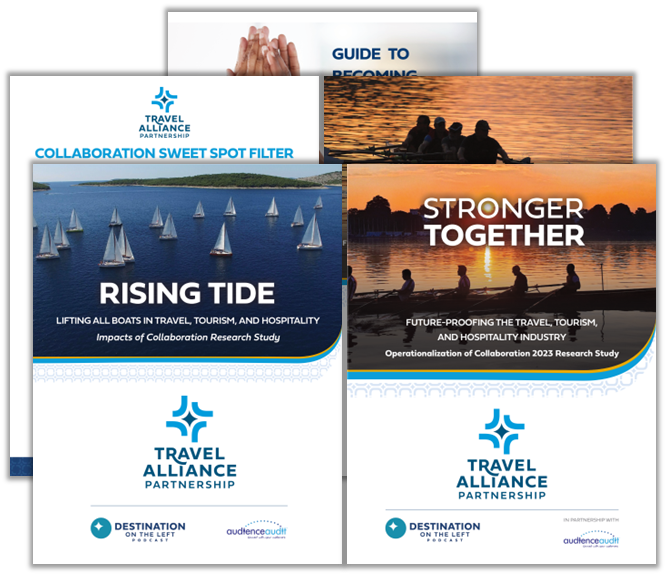
Our first research study confirmed that collaboration is a constant in the travel, tourism and hospitality industry. It is not a matter of if, but when and how, organizations will collaborate together. Our latest study reveals how organizations are putting collaboration into operation and how they are setting up systems and processes so that collaboration becomes a strategic part of the organization.
"*" indicates required fields