Preparing Destinations for Group Travel, with Patrick Keyes and Amy Larsen
Episode 503

 On this episode of Destination on the Left, I continue our special series in partnership with the American Bus Association with co-host Fred Ferguson, CEO of ABA, and guests Patrick Keyes of Rainbow Air Helicopter Tours in Niagara Falls, New York, and Amy Larsen of the Wyoming Office of Tourism. Together, they explore what it takes for attractions and destinations to welcome group travel, from investing in the right infrastructure to helping local businesses recognize the potential of motorcoach visitors. Through examples from Niagara Falls and Wyoming, Patrick and Amy share how strong destination partnerships, thoughtful planning, and creative approaches to visitor experiences can help communities develop compelling group tour products while preserving what makes them unique.
What You Will Learn in This Episode:
- How attractions can assess their readiness for motorcoach groups and invest in the infrastructure that makes visits easier
- Why communication, operational details, and understanding tour operator needs are essential to creating a smooth group experience
- How destination marketing organizations can help attractions recognize their potential and build confidence in serving larger groups
- What it takes to turn local history, culture, and existing community activities into distinctive group tour experiences
- How partnerships between attractions, restaurants, tour operators, and destination organizations can solve capacity and logistical challenges
- Why familiarization tours and sustained relationship-building help tour operators discover and sell new experiences
- How destinations can balance practical constraints, such as travel distances and lodging availability, with authentic experiences that encourage visitors to explore more
Building the Infrastructure and Experience for Group Travel
Welcoming motorcoach groups involves much more than having an attraction worth visiting. As Patrick Keyes explains, Rainbow Air Helicopter Tours’ recent $26 million investment transformed its operation from a small seasonal helicopter business into a more comprehensive visitor experience. The new tourism center includes expanded helicopter capacity, a virtual reality experience, interactive historical exhibits, retail, refreshments, and restrooms. Just as importantly, its design considers the practical needs of motorcoach operators, including convenient bus parking and easy access to the entrance. These details help create a more comfortable experience for visitors while making the attraction easier for tour operators to include in an itinerary.
Patrick emphasizes that readiness also depends on planning and communication before a group arrives. Attractions need to understand group size, timing, capacity, safety requirements, and the steps required to move visitors through an experience efficiently. At Rainbow Air, coordinating arrival times, passenger groups, safety briefings, and alternative activities when weather prevents flights helps make the visit more predictable. For attractions considering this market, the lesson is to build on processes that already work, learn from experienced industry partners, and adapt operations gradually rather than assuming a successful individual visitor experience will automatically translate to a successful motorcoach visit.
Helping Local Partners Turn Their Stories Into Group Experiences
Amy Larsen shares how the Wyoming Office of Tourism works with attractions and businesses across a large, rural state where communities have distinctive stories but may have limited staffing, dining options, or capacity for larger groups. A key part of her role is helping partners recognize what they can offer and how their existing capabilities might translate to group travel. A business that regularly serves a large private event, for example, may have more potential than its owners initially realize. With thoughtful planning, buffet service, smaller rotating groups, or partnerships with nearby businesses, an attraction can often create a workable experience without having to reinvent its entire operation.
The opportunity is also to make the experience more meaningful by bringing local character into the itinerary. Amy describes examples that include a meal in a historic ghost-town setting, local ranching stories shared over dinner, and a private rodeo experience paired with food from a local caterer. These ideas work because they build on what already exists in the community, turning local knowledge, traditions, and relationships into experiences visitors cannot easily find elsewhere. Amy’s approach highlights the importance of knowing each partner’s real capabilities, helping them tell their stories with confidence, and ensuring that the experience meets the expectations of both the tour operator and the travelers.
Strengthening Partnerships That Make Destinations Easier to Sell
Both guests underscore that group travel depends on relationships across the tourism ecosystem. Patrick describes working closely with the Niagara region’s destination organization and other local businesses to build awareness, identify complementary offerings, and create more complete visitor experiences. He sees consistent communication and a willingness to participate in collaborative opportunities as essential to that work. His philosophy of saying yes when possible reflects the value of being an active partner: opportunities such as familiarization visits, itinerary planning, and last-minute requests can introduce an attraction to new operators while strengthening the wider destination.
Amy brings a similar perspective to Wyoming, where long distances, limited lodging, and fewer conventional dining options can make itinerary planning challenging. Rather than dismissing a location because it does not fit a standard travel pattern, she works with partners and tour operators to find creative solutions that respect travel times and deliver an authentic experience. She also stresses that trust takes time. Tour operators may plan their catalogs years in advance, so destinations need to keep nurturing relationships, demonstrating their understanding of the market, and bringing partners and operators together through familiarization tours. Across both conversations, the broader lesson is that group-ready destinations are built through shared effort: understanding operational needs, recognizing local strengths, and helping each partner see how their contribution can become part of a memorable, well-planned journey.
Resources:
Patrick Keyes
- Website: https://www.rainbowairinc.com/
- LinkedIn: https://www.linkedin.com/in/patrick-keyes-1001186/
- Contact: keyesp@rainbowairinc.com
Amy Larsen
- Website: https://travelwyoming.com/
- LinkedIn: https://www.linkedin.com/in/amy-larsen-mtm-b0034856/
We value your thoughts and feedback and would love to hear from you. Leave us a review on your favorite streaming platform to let us know what you want to hear more of. Here is a quick tutorial on how to leave us a rating and review on iTunes!
Related Podcasts




Collaboration Toolkit
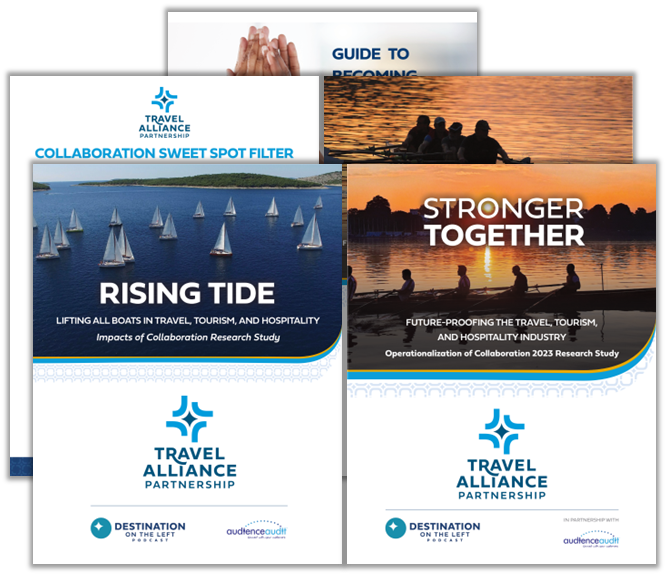
Our first research study confirmed that collaboration is a constant in the travel, tourism and hospitality industry. It is not a matter of if, but when and how, organizations will collaborate together. Our latest study reveals how organizations are putting collaboration into operation and how they are setting up systems and processes so that collaboration becomes a strategic part of the organization.
"*" indicates required fields