Speaking Their Language: Smarter Travel Marketing for Gen Z
If marketing to Gen Z sometimes feels like trying to decode an entirely different language, you’re not alone. From rapidly evolving slang to trends that either slay or flop in record time, this generation challenges traditional approaches at every turn, and they’ll clock instantly whether your content hits the right tone or not.
But underneath the surface, the fundamentals of travel marketing for Gen Z aren’t about chasing trends or looking for the next viral moment. They’re about understanding how this generation communicates, what they value, and how they decide where they spend their time and money.
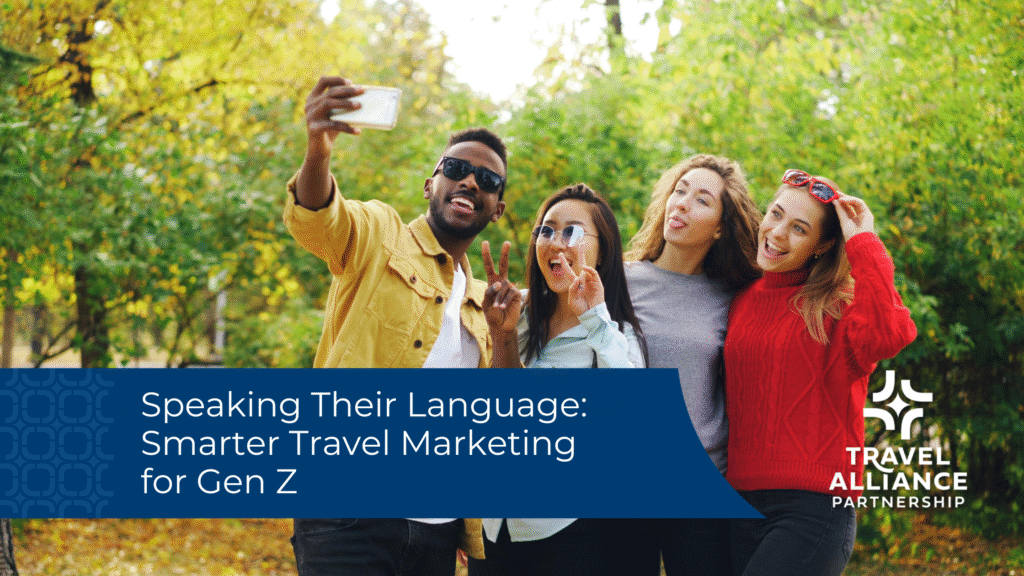
In Destination on the Left podcast episode #443, TAP intern Nathan Oyer shared insights from a Gen Z-focused training session built on current research and first-hand perspective. The result is a practical look at what actually works and what doesn’t when trying to connect with this audience.
Why Travel Marketing for Gen Z Starts with Language
Language does more than communicate information. It shapes perception, builds identity, and signals whether a brand actually understands its audience. For Gen Z, those signals are immediate and often decisive.
Many marketers unintentionally default to messaging that resonates with their own generation. It’s an easy trap, especially when content is created quickly or based on internal assumptions. But when that happens, something gets lost. The messaging might be polished, even well-crafted, but to Gen Z audiences, it can miss the mark in a way that’s hard to define but easy to notice.
For destinations, this has real implications. The way you describe an experience can either invite Gen Z in, or quietly signal that it’s not really meant for them in the first place.
The Risk of Marketing to Yourself Instead of Your Audience
One of the most important takeaways is deceptively simple: define your audience before you define your message.
Gen Z travelers aren’t just younger versions of millennials. They interpret tone, intent, and authenticity differently, and they are quick to disengage when something feels off. If your messaging is built around what you think sounds compelling, rather than what resonates with them, the disconnect is immediate.
Effective travel marketing for Gen Z starts with intentional language choices that reflect how they actually communicate, not how brands assume they should. When you get that right, your messaging doesn’t just sound better – it resonates, builds trust, and invites them in in a way that feels natural instead of forced.
What Makes Gen Z Travelers Different
Gen Z is the first generation to grow up fully immersed in digital technology, and that shapes everything from how they discover destinations to how they evaluate them. They move quickly, expect information instantly, and aren’t afraid to scroll past anything that doesn’t grab their attention.
They also tend to be more selective in their purchasing decisions. Rather than buying into abstract promises, they look for clear, practical reasons to engage and often need to justify why something is worth their time. Instead of being drawn in by a vague description of a “once-in-a-lifetime experience,” they’re more likely to respond to specifics–what they’ll actually do, what makes it different, and what they’re getting for their time and money.
For example, instead of promoting a “weekend getaway in the mountains,” highlight exactly what that looks like: a two-hour scenic hike with a waterfall payoff, a locally owned café within walking distance, and a sunset viewpoint that doesn’t require a long drive. The more clearly you show how time will be spent, the easier it is for Gen Z travelers to picture themselves there (and justify the trip along the way).
Values play a central role in that decision-making process as well. It’s not enough to say a destination is “sustainable” or “inclusive.” Show what that looks like in practice, whether that’s highlighting local businesses, showcasing diverse voices and experiences, or being transparent about conservation efforts. For example, instead of stating a commitment to sustainability, feature a short video of a local guide explaining how they protect the landscape visitors are exploring.
Relatability Is the Core of Travel Marketing for Gen Z
If there’s one concept that defines travel marketing for Gen Z, it’s relatability.
Gen Z audiences are drawn to content that feels familiar and real. They want to see themselves in the experience, not just admire it from a distance. That’s a big reason why micro-influencers can often outperform celebrities. Their content feels closer to real life, and not like a staged product placement.
From Polished Campaigns to Real Moments
Highly produced campaigns still have a role, but they are no longer what necessarily drives engagement. Gen Z gravitates toward content that feels immediate, human, and a little less polished.
That includes behind-the-scenes moments, unfiltered experiences, and content that captures a range of emotions and not just the greatest hits. A quick video of someone navigating a new city, missing a turn, or reacting in real time can land harder than a perfectly framed, Instagrammable landscape.
For travel marketers, this might mean shifting from fully staged shoots to incorporating user-generated content or creator-led storytelling. A visitor sharing their actual day—where they went, what surprised them, what didn’t go as planned—can often resonate more than a perfectly scripted campaign.
Wellness and Values Are Shaping Travel Decisions
For Gen Z, travel is closely tied to well-being. It’s not about getting away, but about feeling better, recharging, and investing in personal growth. There is a growing focus on wellness, from fitness and outdoor activities to experiences that support mental health.
This shift influences how destinations are evaluated and what types of experiences stand out.
Designing Experiences That Feel Personally Meaningful
Wellness does not have to mean luxury or exclusivity. In many cases, it shows up in simple, accessible ways such as walkable green spaces, opportunities to unplug, or activities that promote movement and reflection, like exercise, meditation, and journaling.
What matters most is how the experience is positioned. Gen Z is drawn to travel that feels purposeful and personally relevant. When destinations can connect their offerings to well-being in a genuine way, it creates a stronger emotional connection.
Using Trends, Slang, and Content Formats the Right Way
Slang and trends can be powerful tools, but they come with risk. Gen Z language evolves quickly, and what feels current today can feel outdated just weeks later.
For brands, this creates a narrow window to use trends effectively. Done well, it enhances storytelling and makes content feel culturally relevant. When done poorly, it comes across as forced or out of touch.
When to Use and Avoid Gen Z Language
The key is not to use slang for the sake of it, but to use it with intention.
Ensure that the slang you are using aligns with your brand voice, fits naturally within the content, and is used in the right context. Make sure that you understand where that language comes from, as many terms have roots in specific communities.
If there is any uncertainty, it is better to avoid using it altogether. Relevance builds trust, but misuse can quickly erode it.
What Brands Get Wrong About Gen Z Expectations
Gen Z expects brands to stand for something and to respond when it matters. This is often framed as cancel culture, but at its core, it is about accountability and transparency.
Not responding to an issue can be just as impactful as responding poorly. Silence is often interpreted as a lack of awareness or concern, which can quickly erode trust with this audience.
Why Authenticity Matters More Than Perfection
Mistakes do not automatically lead to lost trust. Many consumers are willing to forgive brands that take responsibility and demonstrate a commitment to improvement.
What Gen Z looks for is honesty, openness, and visible effort. They want to see that a brand is listening and evolving, not ignoring feedback or deflecting responsibility.
This might look like acknowledging seasonal challenges, overcrowding concerns, or community impact, and communicating how those issues are being addressed. Transparency, even when imperfect, builds more trust than avoiding the conversation entirely.
Creating Content That Actually Connects
Content format plays a critical role in engagement, especially with Gen Z audiences. Short-form video has become the dominant medium, shaping how travelers discover and evaluate destinations.
Capturing attention immediately is essential. Without a strong opening moment, content is quickly skipped.
Why Video Is Non-Negotiable
Platforms like TikTok and Instagram Reels have fundamentally changed how travel content is consumed. Video is no longer just a supporting format– it’s often the first point of interaction.
The first few seconds matter most. Instead of opening with a logo or wide scenic shot, lead with something engaging—a question, a surprising moment, or a quick payoff. For example: “This trail leads to this view in under 30 minutes,” followed immediately by the view itself.
Instead of relying solely on written content and hero images, show experiences in motion. A 10-second clip of someone arriving at a trailhead, ordering food, or reacting to a view can communicate more than a static image. These small, in-between moments help build a fuller, more believable picture of the destination.
Don’t Market to Gen Z—Connect with Them
At its core, travel marketing for Gen Z is not about mastering trends or mimicking language. It is about building genuine connection through understanding, relevance, and intention.
Gen Z wants to see themselves in your story. They want to understand why something matters and how it fits into their lives. And they expect brands to communicate with clarity and authenticity.
In practice, that means rethinking not just what you say, but how you show up. It’s choosing clarity over cleverness, specificity over generalization, and authenticity over polish. Small shifts in language, content, and storytelling can make the difference between being scrolled past and being saved for later.
The destinations that succeed will not be the ones that try the hardest to sound like Gen Z. Instead, they will be the ones that take the time to understand them and show up in a way that feels real.
Author
Related Posts
Sorry, we couldn't find any posts. Please try a different search.
Collaboration Toolkit
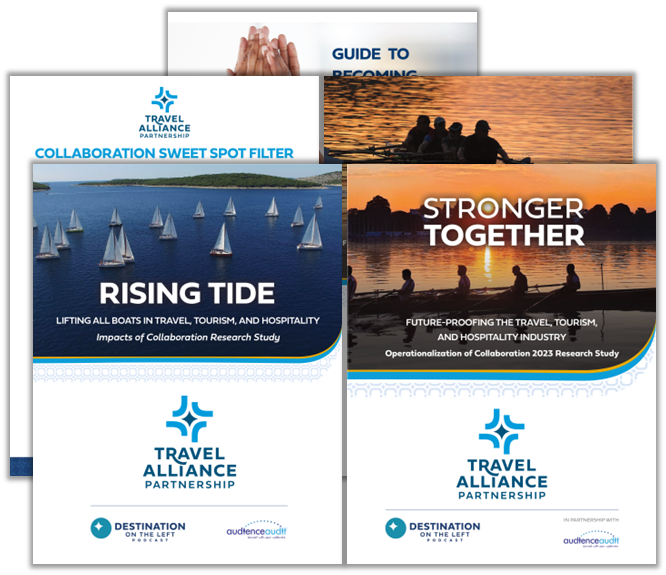
Our first research study confirmed that collaboration is a constant in the travel, tourism and hospitality industry. It is not a matter of if, but when and how, organizations will collaborate together. Our latest study reveals how organizations are putting collaboration into operation and how they are setting up systems and processes so that collaboration becomes a strategic part of the organization.
"*" indicates required fields