Niche Group Travel Starts With Communities
Group travel is changing.
For a long time, group trips were built around logistics—shared transportation, fixed schedules, and stress-free travel. But today’s travelers don’t join group trips because they need help planning. They join because they want to travel with people who share their interests.
Growth in group travel is no longer about making groups bigger – in fact, small groups sizes are one of the biggest group travel trends. Instead, the key to growth is tapping into existing communities and the leaders who already bring people together, to make group travel more meaningful.
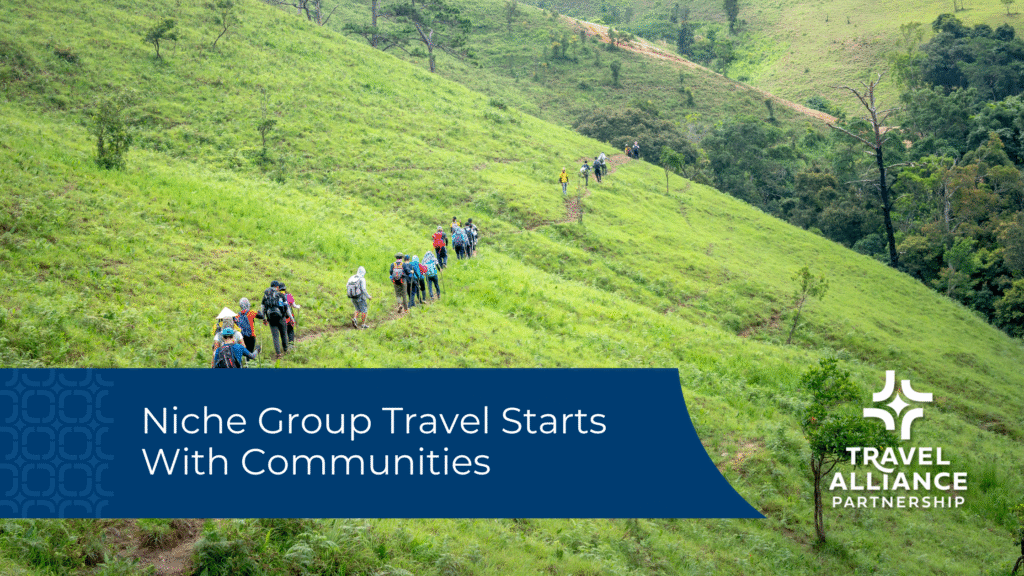
Why Niche Groups Are the Future of Group Travel
From Convenience to Connection
Many travelers today are comfortable traveling independently. They know how to book flights, find accommodations, and plan itineraries on their own. As the younger generations begin to retire, they don’t need to turn to the traditional senior motorcoach tours for convenience.
However, what will draw them to the new evolution of group travel is connection. Traveling with others who share a passion, a hobby, or a common goal adds depth to the experience. The trip becomes about shared moments, not just shared logistics.
This is why interest-based and affinity groups are becoming such a strong driver of group travel demand.
Why Shared Interests Drive Group Demand
Niche groups form around why people travel, not just where they go. Whether it’s a garden club, a music organization, an alumni group, or a wellness community, the destination supports the interest—not the other way around.
Because these groups already exist, they come with built-in trust and familiarity. Participants are more likely to commit, engage, and follow through because they’re traveling with people they already know.
For the tourism industry, this means group travel works best when it starts with community. When a trip is designed around shared interests, it feels more personal—and it’s easier to bring the group together in the first place.
What Niche Group Travel Means for the Tourism Industry
Niche tourism has become an important strategy for destinations and travel companies looking to stand out. By focusing on specific interests—like food, culture, outdoor recreation, or heritage—tourism organizations can attract travelers who are more engaged and more intentional about how they travel.
Niche group travel builds on that same idea, but shifts the focus from the experience itself to the people experiencing it together. Instead of marketing a niche offering to individual travelers, niche group travel starts with an existing community and creates a trip around what already connects them.
Why Niche Groups Are Easier to Build and Sustain
Built-In Communities Reduce Friction
One of the biggest challenges in group travel is getting people to commit. Why would they choose a group departure that limits their choices, when they are comfortable travelling on their own?
Niche group travel solves the challenge of filling groups by starting with communities that already exist.
These groups—clubs, associations, alumni networks, cultural organizations, and interest-based communities—already have relationships in place. Members trust each other, communicate regularly, and share a common reason for coming together. Travel becomes a natural extension of that connection.
For travel sellers, this means less effort spent convincing people to join and more focus on creating the right experience for the group.
Higher Engagement Leads to Stronger Participation
Because niche groups are built around shared interests, engagement tends to be stronger before, during, and after the trip. Travelers are more invested in the experience because it connects directly to something they care about.
This often shows up in practical ways: higher participation, stronger word-of-mouth, and a greater sense of ownership within the group. Travelers aren’t just customers—they’re part of a shared experience with people they know.
From an industry perspective, this makes niche group travel more sustainable over time. Groups that travel well together are more likely to travel again, recommend the experience to others in their community, and continue building demand organically.
The Power of Group Leaders and Community-Driven Experiences
Why Group Leaders Matter
Behind most successful niche group travel experiences is a strong group leader. These are the people who naturally bring others together—organizers, instructors, community builders, or trusted voices within a group.
What makes them effective isn’t their large following or marketing reach. It’s trust. Group members already look to these leaders for guidance, ideas, and opportunities to connect. When a leader supports a group trip, it feels less like a sales pitch and more like an invitation.
Tour operators and travel advisors looking to build a group should start by being active in their own communities, and keeping an eye out for charismatic leaders to recruit as partners in the process.
Partnering with Group Leaders
Working with a group leader should feel like a partnership, not a transaction. Group leaders are investing their time, credibility, and relationships into bringing people together, and recognizing that effort goes a long way.
Offering thoughtful perks can help motivate leaders and make them feel valued. This might include complimentary travel once a group reaches a certain size, special experiences during the trip, or added recognition as the group host. These gestures reinforce that the leader is an essential part of the group’s success—not just a name attached to it.
When leaders feel supported and appreciated, they’re more likely to stay engaged, communicate enthusiastically with their group, and consider organizing future trips. Over time, this approach helps turn a single successful group into an ongoing relationship that benefits everyone involved.
Community-Led Growth Is the Future of Group Travel
Niche group travel works because it starts with people, not products. When travel is built around real communities—groups connected by shared interests, values, or goals—it becomes easier to bring people together and create experiences that feel meaningful.
This approach offers a sustainable path to group travel growth. Instead of trying to appeal to everyone, niche group travel focuses on serving the right groups well, often leading to stronger participation, repeat travel, and long-term partnerships.
As group travel continues to evolve, the opportunity is clear: by tapping into niche communities and supporting the leaders who unite them, the tourism industry can foster connection and build group travel that lasts.
Author
Related Posts
How Curated Experiences Can Help Your Tourism Marketing
In years past, travelers may have been satisfied to see sites like the Eiffel Tower or Colosseum; now they want to get behind the scenes,...
4 Common Types of Group Tours
When you see a big motorcoach cruising down the highway, do you ever wonder who’s inside? The answer: just about anyone. Group tours attract all…
Collaboration Toolkit
Our first research study confirmed that collaboration is a constant in the travel, tourism and hospitality industry. It is not a matter of if, but when and how, organizations will collaborate together. Our latest study reveals how organizations are putting collaboration into operation and how they are setting up systems and processes so that collaboration becomes a strategic part of the organization.
"*" indicates required fields