How to Use Pinterest for Tourism Marketing: Getting Started
Pinterest has become an increasingly valuable platform for tourism marketers looking to drive long-term discovery and website traffic. Unlike traditional social platforms that prioritize short-term engagement, Pinterest rewards useful, searchable content that travelers can save and return to later. For these and many other reasons, Pinterest is a social media platform you need to consider for your tourism marketing,
Today we’re going to focus on the practical side: how to get started, what to post, and how to build a simple Pinterest workflow that supports your broader tourism marketing efforts.
Setting Up Your Pinterest Account
The first step is treating Pinterest less like a social media profile and more like a searchable content hub. Small setup decisions can make a significant difference in how your content gets discovered over time.
Optimize Your Profile
Start with a Pinterest business account rather than a personal account. A business account gives you access to analytics, website claiming, and additional profile customization tools that are important for tourism organizations.
Your profile name and bio should include natural keywords that describe your destination, attraction, or tourism offering. A destination marketing organization, for example, might include phrases like “Ontario weekend getaways,” “family travel inspiration,” or “wine country experiences” within the profile description.
Claiming your website is another important step. Pinterest tends to favor content connected to verified domains, and it also ensures your Pins are associated with your brand consistently across the platform.
Consistency matters visually, too. Use the same logo, colors, and brand voice that appear on your website and other marketing channels so travelers immediately recognize your content.
Example: See how Pure Michigan keeps their brand aesthetics consistent on their channel.
Build Boards Around Traveler Interests
Boards are one of the most important organizational tools on Pinterest. Think of them as categories that help travelers browse ideas based on their interests or planning needs.
A common mistake is creating boards that are too broad or too focused on internal organizational language. Instead, structure boards around how travelers actually search and plan.
Examples might include:
- Family-Friendly Weekend Trips
- Fall Road Trips in New York State
- Romantic Winery Getaways
- Outdoor Adventures for Couples
This approach helps your content align more naturally with Pinterest search behavior while also making your account easier to navigate.
Board titles and descriptions should include keywords naturally, but readability still matters. Avoid stuffing multiple phrases into every description. Clear, conversational language tends to perform better over time.
For brands just getting started, it’s usually better to launch with five to ten well-developed boards rather than dozens of empty categories.
Understanding the Anatomy of an Effective Pin
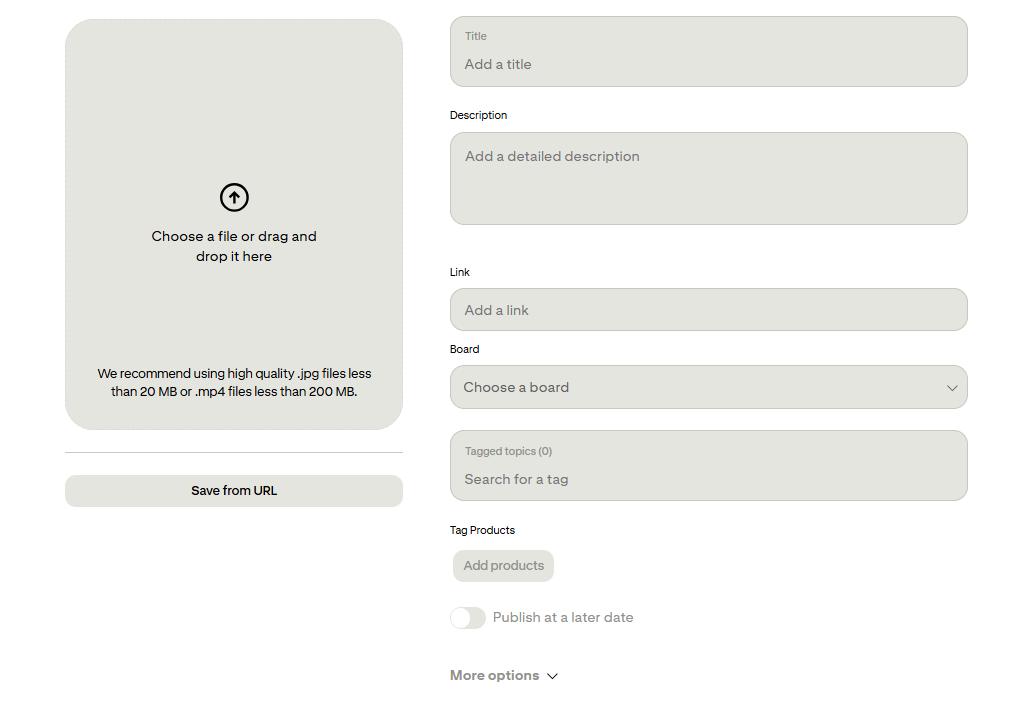
Visual Pin Formats
Pinterest supports several types of Pins, but most tourism brands should focus primarily on static image Pins and short-form video Pins.
Static Image Pins work especially well for:
- itineraries
- travel guides
- destination inspiration
- blog promotion
- seasonal experiences
Video Pins are increasingly important because Pinterest continues prioritizing motion content in the feed. Tourism brands already have a natural advantage here because travel experiences translate well visually.
Short videos showcasing scenic drives, local restaurants, hotel walkthroughs, hiking trails, or seasonal events can perform especially well when paired with strong titles and search-friendly descriptions.
You do not need highly produced cinematic content to succeed. In many cases, simple, authentic footage performs better because it feels more relatable and easier to imagine experiencing firsthand.
Design Pins for Mobile Discovery
Pinterest is overwhelmingly mobile-first, so vertical design matters.
Pins should be easy to read quickly on a phone screen. Strong tourism Pins typically include:
- vertical imagery
- clear focal points
- minimal text overlays
- high-quality photography
- strong visual contrast
Avoid overcrowding designs with too much text or too many visual elements. The image should create immediate emotional appeal while the title provides context.
Tourism organizations already possess some of the strongest visual assets available online. Scenic photography, immersive experiences, local food, accommodations, attractions, and seasonal landscapes naturally align with Pinterest’s visual format.
Pin Titles and Descriptions That Support Discovery
Pinterest functions more like a search engine than a traditional social feed, so titles and descriptions play a major role in discoverability.
Strong Pin titles tend to match how travelers actually search:
- Best Fall Getaways in Ontario
- Family-Friendly Things to Do in Buffalo
- Weekend Wine Trips in the Finger Lakes
- Scenic Winter Cabins Near Toronto
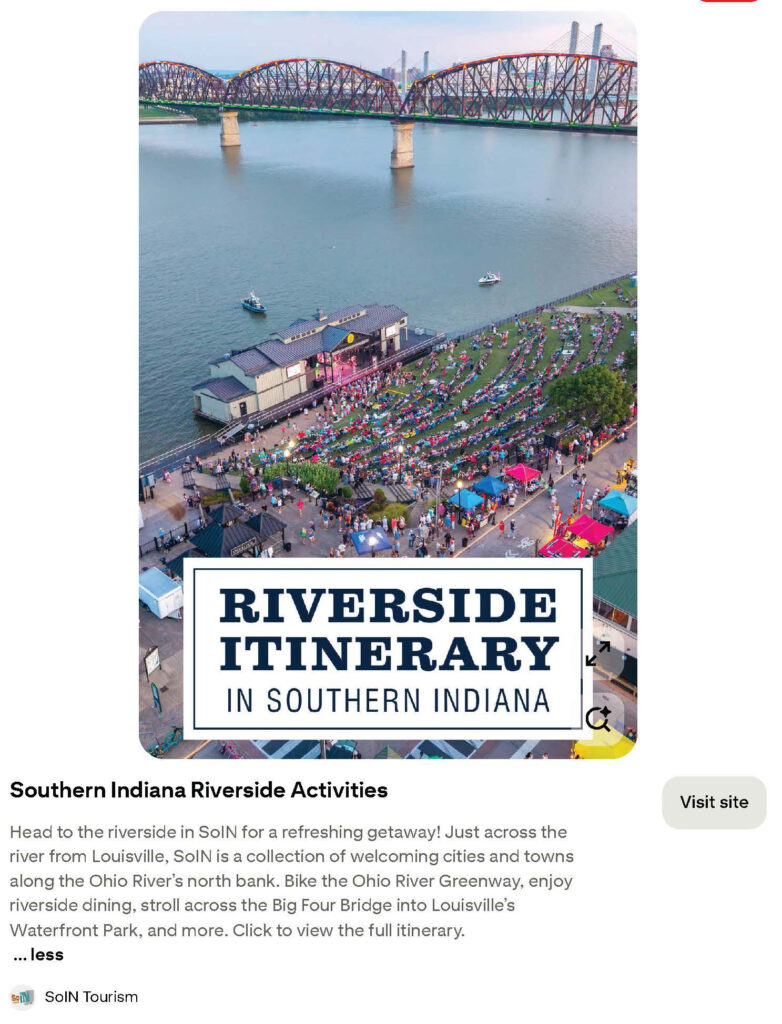
Descriptions should expand on the value of the content while incorporating additional relevant keywords naturally. Think about what information would genuinely help someone planning a trip.
Pinterest keywords differ from hashtags on platforms like Instagram. Rather than relying heavily on hashtags, Pinterest prioritizes searchable phrases woven naturally into titles, descriptions, boards, and profiles.
Example: SoIN Tourism’s Pin promoting how travelers can jump on the Slowcation trend in their area.
Use Keywords and Interest Tags Strategically
Pinterest uses keywords and interest signals (not hashtags – the platform hasn’t used those since 2022) to understand what your content is about and who should see it.
Keywords can appear in:
- your profile
- board titles
- board descriptions
- Pin titles
- Pin descriptions
Interest tags also help Pinterest categorize content more accurately. These tags work behind the scenes to connect your Pins with relevant search behavior.
The goal is not to optimize every sentence mechanically. Instead, focus on clear language that mirrors how travelers describe the experiences they are searching for.
Every Pin Needs a Destination
One of Pinterest’s biggest advantages for tourism marketers is that every Pin can link directly to a URL. Unlike many social platforms that discourage outbound links, Pinterest is designed to help users discover and save content they want to revisit later.
That means your Pins should always connect travelers to something useful, informative, or actionable.
Most tourism marketers already have plenty of great content that would make great Pins, such as:
- blog posts
- destination guides
- itineraries
- event pages
- booking pages
- YouTube videos
- podcasts
- seasonal landing pages
- travel resources and planning tools
Pinterest also works especially well with video content. Short vertical clips pulled from YouTube Shorts, Instagram Reels, TikTok videos, drone footage, or behind-the-scenes travel content can help drive traffic back to your website or longer-form videos.
The strongest Pins combine inspiration with practical value. Beautiful visuals attract attention, but useful content gives travelers a reason to click, save, and return later.
Build a Pinterest Publishing Strategy That’s Sustainable
Pinterest rewards consistency more than volume. Tourism organizations do not need to publish dozens of Pins every day to see meaningful results.
A manageable, repeatable workflow is far more effective long term.
Prioritize Fresh Pins
Pinterest favors fresh content, especially fresh creative.
There are different levels of freshness, and Pinterest will highly favor content that leads to a brand new URL, like a new blog post or landing page. But every URL (even an older one) can be repurposed into many different pins, and fresh visuals also have a good chance to catch the attention of the algorithm.
A single destination guide, for example, can have many different angles simply by changing the image, headline, seasonal framing, or travel niche.
This is especially valuable for evergreen tourism content that remains relevant year after year.
Balance Evergreen and Seasonal Content
Strong Pinterest strategies include both evergreen and seasonal content.
Evergreen tourism content might include:
- destination guides
- family travel tips
- winery trails
- hiking recommendations
- food experiences
Seasonal content could focus on:
- fall foliage
- summer festivals
- holiday markets
- ski weekends
- spring road trips
One of Pinterest’s biggest advantages is that travelers often search months ahead of travel dates. That means seasonal content should be published well before the season actually arrives. It can take 6 months or more for the Pinterest algorithm to fully index new Pins to show up in search correctly, so don’t give up if you don’t see immediate results.
Create a Simple Weekly Workflow
Pinterest becomes much easier when integrated into your existing content workflow rather than treated as a completely separate marketing channel.
A simple workflow might look like:
- Publish a blog, video, or landing page
- Create two to three Pins promoting it
- Schedule Pins across several weeks (using the native scheduler or a tool like Tailwind)
- Monitor performance and refine over time
This process helps tourism teams maintain consistency without creating unnecessary workload.
Coordinate Pinterest With Other Channels
Pinterest works best when it supports your broader content ecosystem.
A destination blog can fuel Pinterest Pins. Pinterest traffic can drive visitors to YouTube videos. Video content can then support email signups or trip planning inquiries.
Rather than viewing Pinterest as another isolated social platform, it helps to think of it as a discovery layer that extends the lifespan of your tourism content.
Start Small, Then Build Momentum
Pinterest can feel overwhelming at first, especially for tourism teams already managing multiple platforms. The good news is that most destinations, attractions, and tourism businesses already have the ingredients needed to succeed.
Strong visuals, useful travel information, seasonal experiences, and storytelling are all natural fits for Pinterest.
The key is starting with a manageable system. Focus on creating searchable boards, optimizing a handful of Pins, and repurposing content you already own. Over time, those efforts can compound into a valuable source of long-term discovery and website traffic.
Author
Related Posts
SEO in Tourism Marketing and AI Search
When we first developed a strong SEO strategy nearly 10 years ago, the search landscape looked very different than it does today. At the time,…
Collaboration Toolkit
Our first research study confirmed that collaboration is a constant in the travel, tourism and hospitality industry. It is not a matter of if, but when and how, organizations will collaborate together. Our latest study reveals how organizations are putting collaboration into operation and how they are setting up systems and processes so that collaboration becomes a strategic part of the organization.
"*" indicates required fields