Pinterest for Tourism Marketing
When most tourism organizations think about social media, they think about Instagram, Facebook, or TikTok. But Pinterest for tourism marketing rarely makes the shortlist.
That is a missed opportunity.
Pinterest isn’t just another place to post beautiful photos. It functions more like a visual search engine, and that distinction makes it especially powerful for travel and tourism brands.
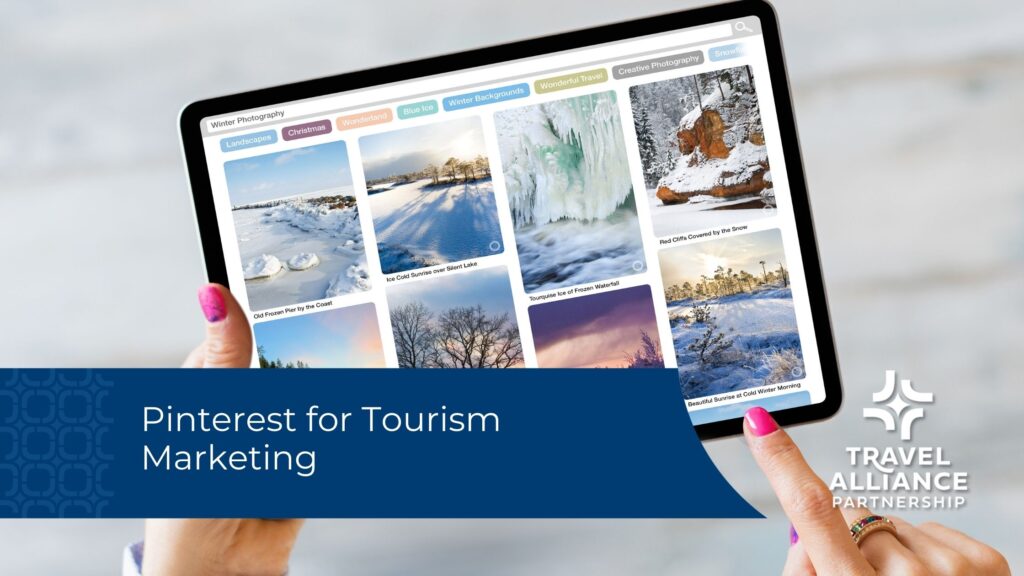
Pinterest Is Built for Discovery
While many platforms focus on engagement and conversation, Pinterest is designed for discovery. Users don’t go there to passively scroll through updates from friends. They go with intent. They are actively searching for ideas, researching options, and saving inspiration for later.
As Pinterest expert Meagan Williamson shared on the Destination on the Left podcast:
“Pinterest is a visual search engine, has been since day one… It wants to help users that have an intent to find you, to find your services, to find your products and map it onto their search intent.”
That search-based foundation changes how the platform works — and how tourism organizations should think about it.
Discovery vs. Engagement Marketing
Engagement platforms like Instagram, Facebook, and TikTok are usually the starting point for tourism marketers. They help nurture existing audiences, build loyalty, and foster conversation with people who already know your brand.
Discovery platforms like Pinterest serve a different purpose. They increase exposure of your destination or business to people who may not know you exist yet. Google search ads are another form of (paid) discovery marketing.
If you’re interested in paid strategies make sure to check out our blog post Tourism Advertising Ideas: Creative and Bold Paid Media Moves.
For organizations with a good grasp on their engagement platforms already, expanding into discovery-focused channels can be a powerful next step. These platforms help you reach travelers earlier in their journey — during the dreaming and researching phase, before they’ve chosen a destination.
Pinterest operates squarely in that space.
Why Pinterest for Tourism Marketing Is a Natural Fit
Travel is inherently visual and highly researched. That combination aligns perfectly with how Pinterest works.
First, travelers are planners. Users often begin travel planning six to eight months in advance. Nearly half of travel searches on Pinterest don’t even include a specific destination. Instead, people search broadly for ideas and inspiration. Tourism marketers know that within the traveler customer journey, most people pick their destination as the first step in planning a trip.
This creates an opportunity for destinations and travel businesses to show up before a traveler has made a decision.
Second, travel is a visual decision. People choose destinations with their eyes. They want to picture themselves there — walking through the downtown, sitting at the restaurant patio, hiking the trail, or relaxing at the resort.
Pinterest was designed for that kind of visual exploration. It helps users imagine the experience and save it for future planning.
Finally, Pinterest’s audience aligns strongly with leisure travel decision-makers. The platform has a significant presence among women and millennials, and younger audiences continue to grow. For family travel, couples’ trips, and leisure experiences, this audience influence matters.
Where Pinterest Fits in the Customer Journey
Pinterest is rarely the final click before a booking. Instead, it plays an earlier — but critical — role in the customer journey.
At the top of the funnel, Pinterest helps travelers discover possibilities. A user may search for “best fall weekend getaways” or “family-friendly beach vacations” long before narrowing down specific destinations.
As they move into the research phase, they begin comparing options, saving ideas, and gathering information. Travel, especially higher-ticket travel, is rarely impulsive. Travelers want reassurance. They want visuals. They want examples. They find and pin what they like.
One of Pinterest’s biggest advantages is that every Pin links to a live URL. Unlike many social platforms that discourage users from leaving, Pinterest is built to send traffic outward — to deeper content, planning resources, and booking pages.
Over time, these touchpoints support what marketers call assisted conversions: multiple interactions that build trust before a traveler finally books.
The Power of Evergreen Visibility
One of the most compelling reasons for tourism organizations to consider Pinterest is content longevity.
On most social platforms, a post may have a lifespan measured in hours or days. On Pinterest, content can resurface for months — and sometimes years.
That long shelf life supports what Meagan Williamson describes as sustainable marketing. Instead of constantly chasing the next viral post, you’re building a searchable library of content that continues to work over time.
For tourism organizations, this has real implications. Seasonal content can reappear year after year. Evergreen guides such as “Best Things to Do in [Destination]” or “Three-Day Itinerary for [Region]” can continuously attract new audiences.
The focus shifts from short bursts of attention to steady discovery.
Pinterest and the Future of Search
Search behavior is evolving. Users increasingly look for information across multiple platforms — not just Google.
Most recently there is the rise of generative AI search, leading to the need for GEO – Generative Engine Optimization. But there are also high volumes of video search (primarily on YouTube) and visual/image search — where Pinterest reigns at the intersection of visual inspiration and search intent.
Content on Pinterest is organized around topics and ideas, and users signal interest by saving and engaging with content. Those behaviors reinforce relevance and visibility.
For tourism marketers already investing in SEO and content marketing, Pinterest can strengthen overall discoverability. It doesn’t replace your existing strategy; it expands it.
In a digital environment where overreliance on one or two platforms can feel risky, adding a search-based discovery channel offers diversification and resilience.
Is Pinterest Worth It for Tourism Organizations?
If your organization is already creating high-quality photography, destination guides, itineraries, seasonal content, or video content, you likely have much of what you need to succeed on Pinterest.
Many tourism organizations are also publishing helpful blog content — itineraries, “best of” lists, event roundups, and planning guides. Content like this pairs naturally with Pinterest because it gives interested travelers somewhere deeper to go when they click. If you’re already investing in helpful, evergreen blog content, Pinterest can extend its reach significantly.
The platform doesn’t require abandoning your current efforts. Instead, it gives your existing content a longer runway and access to travelers in the early stages of planning.
For a deeper dive into how Pinterest works strategically for travel brands, we recommend listening to our full conversation with Meagan Williamson on Destination on the Left. She shares insights on discovery marketing, sustainable growth, and how tourism organizations can position Pinterest within their broader marketing mix.
Related Posts
Tourism Marketing Blogs Turn Inspiration Into Travel
Most destination marketing organizations already have a blog. Many tourism-focused organizations and businesses do as well. But many don’t have a strategy for producing regular content….
Collaboration Toolkit
Our first research study confirmed that collaboration is a constant in the travel, tourism and hospitality industry. It is not a matter of if, but when and how, organizations will collaborate together. Our latest study reveals how organizations are putting collaboration into operation and how they are setting up systems and processes so that collaboration becomes a strategic part of the organization.
"*" indicates required fields