Social Media Content for Tourism: How to Stop the Scroll
You have a beautiful photo. You’ve written the caption, checked the link and found a spot on the content calendar. But before you hit publish, there’s one more question worth asking: Why would someone stop to look?
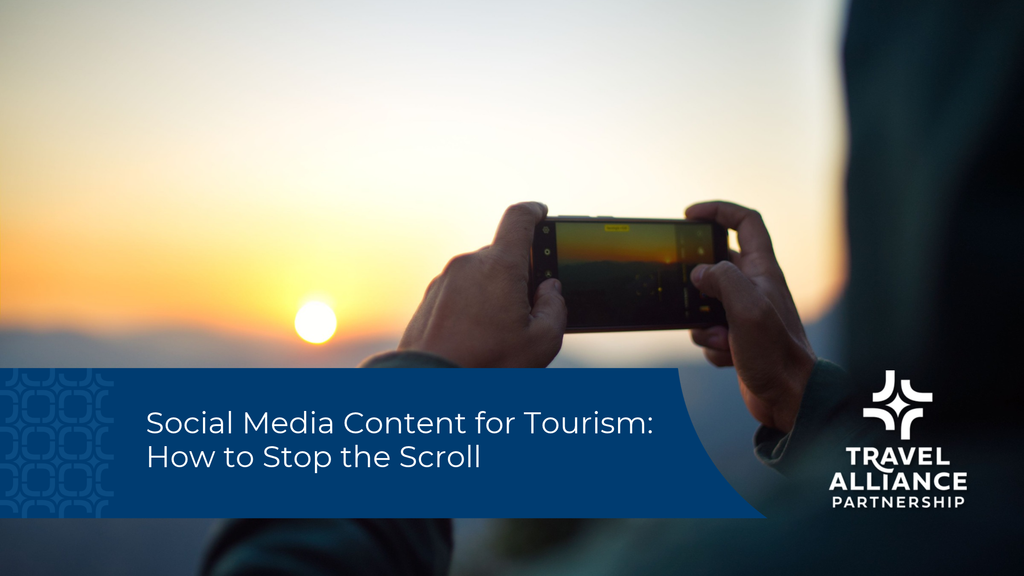
As tourism marketers, we know what makes our destinations worth visiting. We’ve met the business owners, trekked the trails and heard the stories behind the historic buildings. Someone scrolling through their feed may know nothing about your destination yet. We need to give them a reason to get curious.
Expedia Group’s 2025 Traveler Value Index, which surveyed over 11,000 consumers across 11 markets, found that 61% use social media for travel inspiration. For tourism marketers, creating content that stops the scroll starts with understanding your audience, leading with a compelling hook, showing what an experience feels like and giving travelers a clear next step.
Start With the Traveler
“People who like to travel” is a pretty broad audience for one social post. A parent looking for something to do on a rainy afternoon has different questions from a couple planning a weekend away. Someone visiting tomorrow needs different information from someone saving ideas for next summer.
Before choosing your photo or writing your caption, think about the person you want to reach. What are they trying to plan? What would make the experience appealing to them? What might be holding them back?
Take a lakeside outing, for example. For a family, the useful story might explain where to rent equipment and what a first paddle involves. For a couple, it could show a quiet morning on the water followed by breakfast at a local restaurant. In both instances, you’re talking about the same place, but you’re giving each audience a different reason to care.
For a broader look at choosing audiences and platforms, listen to our conversation about social media and shared tactics.
Write Social Media Hooks That Give Travelers a Reason to Pause
A social media hook is the opening visual, line or moment that gives someone a reason to keep watching or reading. It might be the opening line of a caption, the first image in a carousel or something happening in the first few seconds of a video.
You don’t have to lean into dramatic claims or ‘clickbait’ to get attention. Often, a specific promise does more work than another “hidden gem” or “must-visit destination.”
Here’s what that could look like:
- “Only have a Saturday afternoon? Start here…” Follow with a realistic itinerary that makes a short visit easier.
- “Your first morning here could look like this…” Show the coffee, waterfront walk and breakfast stop that makes the idea appealing.
- “Before you head on the trails, save these three tips…” Give travelers useful information they’ll want to find again.
The opening visual of your content should support that promise. If you’re sharing an easy afternoon itinerary, show the first stop. If you’re a local guide with advice for first-time paddlers, open with your best tip.
TikTok’s Creative Codes recommends a hook, body and close for advertising. That structure is also a useful starting point to test in organic content: introduce the idea, deliver something worthwhile and give interested viewers a next step. It can help you organize a post that has plenty of useful information but no clear beginning or ending.
Show What Being There Feels Like
A beautiful drone shot can introduce your destination, but smaller details can help someone imagine how they’d spend their time there.
Think about the sound of a paddle entering the water, a baker pulling a tray from the oven or a guide pointing out something that visitors usually walk past.
People can help tell that story, too. Let the potter talk while they work. Hearing why they chose a particular glaze gives viewers a story to remember, and something to ask about when they visit. A family exploring an attraction can help other parents picture what their own visit might involve. If your video promises a behind-the-scenes look, do viewers need several scenic shots before they get behind the scenes? Could the opening start with the person doing the work?
Choose the format that helps you communicate clearly. A carousel might make an itinerary easy to follow. A still image could capture a compelling moment. Video can give a local voice room to tell a story.
Whatever you choose, make the text readable and use captions where needed. For short-form videos, leave room for the platform’s buttons and captions so they don’t cover important information.
Make the Rest Worth Their Attention
A good hook creates an expectation, but the rest of the post needs to fulfill it.
If you promise an easy afternoon, explain enough for someone to picture the plan. If you introduce an unusual piece of history, tell the story. Sending viewers through several slides or minutes of a video only to deliver a general invitation can leave them with more questions than answers.
Your content pillars can help clarify what each post should offer.
- Educational content answers a question.
- Inspirational content helps someone imagine an experience.
- Personal content introduces the people behind a place.
- Promotional content explains an offer and why it matters to the intended visitor.
One post doesn’t need to do all of those things. Give it one clear purpose and keep the details that support it. Instead of saying there’s “something for everyone,” show what a visitor could enjoy and how they can experience it.
Make it Easy to Take the Next Step
Once someone is interested, help them take the next step.
A post featuring an itinerary might invite the user to save it for their visit. A getaway idea post could encourage them to share it with their travel companion. An upcoming event might lead them to purchase a ticket.
Check where that next step takes them and make it as easy as possible for them to get there.
This is where your shared content connects with your broader marketing approach. Within the PESO model, shared media can introduce an experience, while an owned resource, such as a blog or planning guide, helps travelers explore the details. Someone spots your paddling video on Instagram, clicks through to your beginner’s guide and finds a nearby outfitter. Each step answers the next question.
For more on how these channels can work together, explore our guide to using the PESO model in tourism marketing.
Measure What Social Media Content Resonates
After publishing, look at whether the post did what you intended.
For a planning post, saves, shares and questions may offer useful clues. For a website traffic goal, review available link activity. For video, look at viewing and retention metrics where the platform provides them.
Compare posts with similar purposes and give them comparable time to gather results. Test a different opening shot or a more specific caption lead. Read the comments for questions your next post could answer. Our approach to data-driven decision making in tourism starts with the question you need to answer.
One post won’t settle your strategy. Over time, those observations can help you understand what your audience finds useful.
Would You Stop Scrolling for This?
Choose one upcoming post and give it another look:
- Who is it for?
- Does the opening make its value clear?
- Do the visual and caption support the same idea?
- Does the content deliver what you promised?
- Is the next step easy to understand?
Your destination already has stories worth sharing. Pick one story, decide who it’s for and show them why they’d want to be there.
Related Posts
Collaboration Toolkit
Our first research study confirmed that collaboration is a constant in the travel, tourism and hospitality industry. It is not a matter of if, but when and how, organizations will collaborate together. Our latest study reveals how organizations are putting collaboration into operation and how they are setting up systems and processes so that collaboration becomes a strategic part of the organization.
"*" indicates required fields