Presentation Skills for Stronger Communication and Collaborations
Improving presentation and listening skills will make us better communicators and collaborators. When I interviewed keynote speaker and performance coach Carol Lempert for my podcast, Destination on the Left, I learned new ideas and techniques for improving communication skills. Carol shared insights, including how to sound and look confident, how to pitch an idea, and how to use high-gain questions to make stronger connections and create better collaborations.
Sound & Look Confident
How will improving your presentation skills make you more effective in meetings and conversations? It has to do with your overall presence. There are four areas that will improve your presence and therefore improve your ability to share ideas, get buy-in on ideas and be a productive contributor to collaborations.
1. Being in the moment
People who are in the moment and fully engaged in meetings are more likely to gain the trust and respect of their colleagues. Multi-tasking during meetings or being preoccupied with other thoughts or activities can diminish your presence and your ability to fully listen.
“In a survey of 2,000 employees, Bain & Company found that among 33 leadership traits — including creating compelling objectives, expressing ideas clearly, and being receptive to input — the ability to be mindfully present (also called centeredness) is the most essential of all.” – Bain & Company, How Leaders Inspire: Cracking the Code
2. What do people see
Being mindful of how you are projecting yourself will strengthen your presentation skills. Are people seeing someone who has anxiety or someone with confidence? Does your body language project someone who is closed-off or someone who is open and willing to participate?
3. What do people hear
What you say will reflect on your presence and can demonstrate your level of interest in the other person or the project you are collaborating on. Asking non-judgmental questions that come from real curiosity will help you strengthen this area of your presence.
4. How do people feel
How you make people feel when you interact with them impacts your overall presence and likability. Do people feel heard? Do they feel that they are in a safe environment where they can freely share ideas and add to the conversation? Are they feeling dismissed? Do they feel that their ideas are not being acknowledged? Improving your listening and presentation skills can make a high impact on this part of your overall presence.
Pitching an Idea
After pitching an idea, wait for a response to make sure there is buy-in.
Ask open-ended questions such as “What do you think?”, and resist trying to force agreement or force a yes answer by asking a closed-ended question. For example, “Do you like my idea?”
Open-ended questions start with what or how – why works too, but be careful, as that can put people on the defensive.
Two great questions to have in your toolbox are:
- What have I missed?
- What are your thoughts?
Using High-Gain Questions to Strengthen Communication
Good business is built on good questions.
You can use high-gain questions to express real curiosity. These questions tell you something about the other person, help them feel comfortable sharing, and provide a deeper understanding of what is important to them.
Examples of high-gain questions:
- What are the things that people are missing?
- Where in your career have you experienced a successful collaboration?
- When did you first learn how to collaborate, and what was that experience like?
- What are the things that will hold people back?
Listening Skills Support Stronger Communication
Listening skills are key to making these questions effective.
- Paraphrase back what you heard to show understanding
- Build on their thoughts and go to another level
- Listen for what is important beneath the surface
People will always reveal their values when sharing their point of view. Strong listening supports a stronger presentation by helping you respond more clearly and thoughtfully.
Collaboration in Practice
While presentation skills strengthen how we communicate, they also play an important role when working with others.
Disagreements are healthy for building ideas and solutions. When we get stuck, it is often because values are in conflict. A useful technique is to acknowledge the other person’s values and refocus on the problem you are solving together.
Self-awareness is key. When you become aware of your own emotional response in a conversation, step back, take a breath, and return to a more rational mindset.
Social awareness can also help move conversations forward. If you observe a colleague becoming emotional, acknowledge it: “I see you are really passionate about this. Can you elaborate on why that is important to you?” Then restate the problem and continue the discussion.
Responding to questions you don’t know the answers to.
- Resist the parking lot. Instead of putting the question aside (in a “parking lot”), put it on the shopping list. Then shop for ideas or information around that question and bring it back to the next meeting. Parking lots can diminish trust and make people feel pushed aside.
- 60% of the time, this answer will work: “What an interesting question, I don’t know either. Let’s find out together.”
Want to go deeper on collaboration? Explore insights from 150+ travel, tourism, and hospitality professionals in our research studies, and use our collaboration toolkit to plan your next successful collaboration.
The communication techniques from my conversation with Carol Lempert can be used across a wide range of professional situations and collaborations. Strengthening your presentation skills will help you communicate more clearly, build stronger relationships, and contribute more effectively in any setting.
Author
Related Posts
Commitment: World-Changing Collaborations
World-changing collaborations are grounded in the Three C’s of Collaboration: Communication, Commonality, and Commitment. This framework is based on over 5 years of podcast interviews,…
Collaboration Toolkit
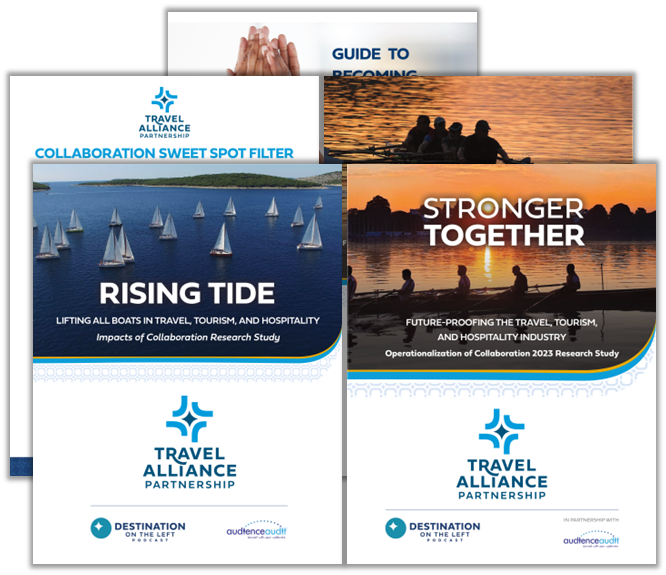
Our first research study confirmed that collaboration is a constant in the travel, tourism and hospitality industry. It is not a matter of if, but when and how, organizations will collaborate together. Our latest study reveals how organizations are putting collaboration into operation and how they are setting up systems and processes so that collaboration becomes a strategic part of the organization.
"*" indicates required fields