Themes from ABA 2026 Part 1: Collaboration is Essential
At Travel Alliance Partnership, collaboration has always been at the center of everything we do. We’ve long believed that when destinations, associations, attractions, and industry partners align around shared goals, the impact is stronger and more sustainable.
What stood out at ABA Marketplace 2026 was how clearly that mindset has accelerated across the industry.
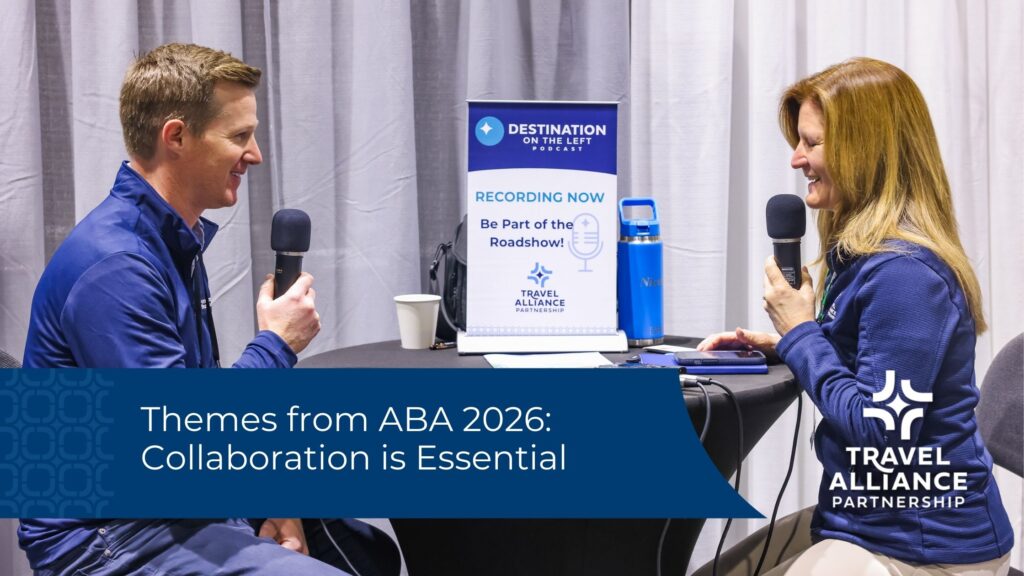
In conversation after conversation during our Destination on the Left Roadshow interviews, travel industry leaders spoke about collaboration not just as an aspiration, but as an active and essential strategy. Whether through advocacy efforts, regional partnerships, or long-standing cross-border relationships, there was a renewed sense of urgency — and intentionality — around working together.
It wasn’t that collaboration was new; it was that the industry has embraced it as mission critical. As Jen Stanley recently wrote in a blog for ABA, collaboration is the future of travel and tourism, and it’s time to level up. This shift was unmistakable throughout our conversations at ABA.
Why Collaboration Is Essential in the Travel Industry
In today’s travel environment, no organization can succeed on its own. Collaboration isn’t an extra step — it’s part of the foundation.
Working Together Drives Real Results
Fred Ferguson, President and CEO of the American Bus Association, put it simply:
“Travel and tourism only works when we work together, when we’re collaborating.”
That idea isn’t just philosophical. It has real impact. Through coordinated advocacy, ABA helped reduce motorcoach tariffs, saving the industry an estimated $150 million annually. That kind of result only happens when people align and speak with one voice.
Terry Fischer, ABA Board Chair and President of Transportation Charter Services, shared that collaboration has to start internally. Breaking down silos, encouraging departments to work together, and building strong relationships with partners all help create a more resilient business — especially during uncertain times.
Associations Bring People Together
While national leadership sets direction, associations help make collaboration practical and personal.
Patricia Cowley of PC Management Services talked about the importance of bringing operators, suppliers, and vendors to the same table. When everyone understands each other’s role, advocacy is stronger and member value grows.
The expansion of regional associations like the Greater Northeast Motor Coach Association shows how widening the circle can strengthen the industry as a whole.
Long-Term Partnerships Build Stability
Collaboration isn’t always about launching something new. Sometimes it’s about protecting relationships that have taken years to build.
Jim Warren of Anderson Vacations shared how partnerships that are 20-30 years old have helped his company navigate political and economic shifts between the U.S. and Canada. Those relationships create trust — and trust creates stability.
When times get tough, strong partnerships matter even more.
Thinking Regionally Instead of Competitively
Some of the strongest examples of collaboration at ABA came from destinations that are choosing to think regionally instead of competitively.
Creating Shared Experiences
In MetroWest Boston, Stacey David and her partners are preparing for major global events like the FIFA World Cup by working together across municipalities and community groups. Instead of competing for visitors, they are building a regional fan experience that encourages people to stay longer and explore more.
Focusing on the Visitor, Not the Zip Code
In Southern Indiana, the “Tour’IN 64” initiative connects destinations along Interstate 64. The goal isn’t to compete for hotel nights — it’s to invite visitors into the region and show them everything it has to offer.
By working together, these destinations are creating fuller itineraries and stronger experiences for groups.
What This Means for Group Travel
Across every conversation at ABA Marketplace 2026, one idea kept coming up: the organizations that thrive will be the ones that believe collaboration is essential, and put that belief into action.
That looks like:
- Aligning industry voices for stronger advocacy
- Sharing resources through associations
- Maintaining long-term partnerships
- Building regional experiences instead of isolated attractions
For more, listen to the full podcast episodes:
Author
Related Posts
Sustainability in Tourism
Sustainability has become one of the most widely used terms in the travel industry. It shows up in strategy documents, marketing campaigns, and conference conversations….
Collaboration Toolkit
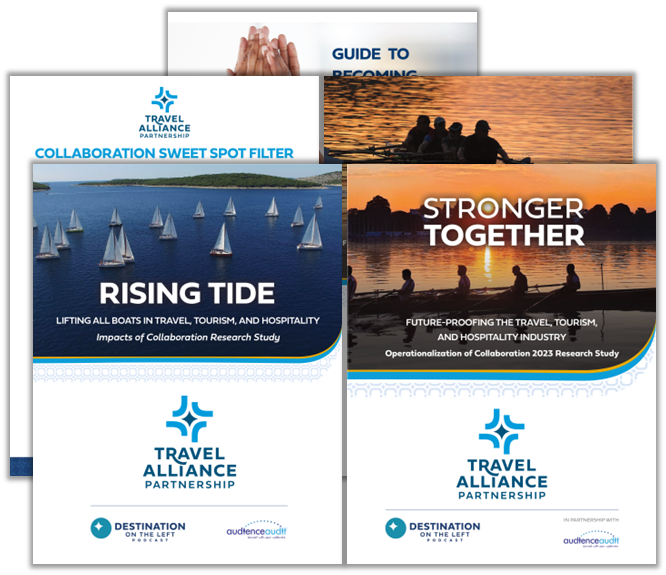
Our first research study confirmed that collaboration is a constant in the travel, tourism and hospitality industry. It is not a matter of if, but when and how, organizations will collaborate together. Our latest study reveals how organizations are putting collaboration into operation and how they are setting up systems and processes so that collaboration becomes a strategic part of the organization.
"*" indicates required fields