What Does It Mean to Operationalize Collaboration and Why Does It Matter?
Most travel and tourism organizations recognize the value of collaboration. But how many have built the processes, systems, and resources necessary to make collaboration an ongoing part of their business?
That question was at the heart of research we conducted with Audience Audit to understand how organizations across the travel, tourism, and hospitality industry approach collaboration. We found that while many organizations are actively collaborating, only 15% have fully operationalized collaboration. About half have partially operationalized their efforts.
What Does It Mean to Operationalize Collaboration?
Operationalizing collaboration means building the infrastructure to support it. This includes budgeting for collaborative initiatives, establishing processes, defining responsibilities, training employees, and measuring results.
It is the difference between pursuing partnerships when opportunities arise and making collaboration an intentional part of how an organization operates. Our research found that organizations that have taken this step recognize its value. Among those that have operationalized collaboration, 69% consider it very valuable to their organization.
The benefits extend beyond individual projects. Survey respondents reported outcomes including increased visitors, customers, or traffic (65%), stronger relationships with existing collaborators (64%), and more opportunities for future collaboration (58%). These results help explain why I believe organizations should approach collaboration with the same discipline they apply to other business strategies.
What Operationalized Collaboration Looks Like in Hospitality
Two guests on my Destination on the Left podcast shared examples of organizations that have built collaboration into their business models. Jennifer Barnwell, President of Curator Hotel & Resort Collection, joined me for Episode #350 to discuss how independent hotels can work together to gain advantages typically available to much larger brands.
Curator brings independent hotels together to leverage collective buying power, access technology and services, and create opportunities that individual properties might not be able to pursue on their own.
What stood out to me was Jennifer’s approach to managing those relationships. Curator establishes goals with its partners, develops agreements designed to create value for both parties, and measures whether the partnership is delivering value.
As Jennifer explained:
“It’s always important to have … KPIs in place that are going to judge our success in every partnership.”
She also emphasized revisiting those measures regularly to ensure both parties continue to benefit.
Kristi Gole, EVP of Strategy at Global Hotel Alliance (GHA), offered another example in Episode #398.
GHA brings independent hotel brands together through a shared loyalty program, GHA DISCOVERY. At the time of our conversation, the alliance included 40 brands and 800 hotels across 100 countries. The shared platform allows independent brands to compete more effectively with major hotel chains while retaining their identities. GHA also facilitates shared services, knowledge exchange, and partnerships with complementary businesses.
Kristi described how the organization evaluates potential partners by starting with the customer. Do the organizations serve compatible audiences? Can they introduce one another to new customers? Are their technology and operations a good fit?
GHA puts that approach into practice by piloting new partnership initiatives, evaluating the results, and expanding them when they work.
Both Curator and GHA demonstrate what is possible when collaboration becomes part of an organization’s operating model. They have invested in the systems, relationships, and processes necessary to make their collaborations successful.
While their models are large-scale, the principles behind them can apply to organizations of any size.
Five Ways to Operationalize Collaboration in Your Organization
Our research points to several practical steps organizations can take.
1. Make Collaboration Part of Your Strategic Plan
If collaboration contributes to your organization’s goals, it deserves a place in your strategic planning process.
Identify where working with other organizations could help you achieve those goals, whether that means attracting new audiences, expanding marketing reach, developing visitor experiences, or addressing shared industry challenges. From there, establish specific objectives for your collaborative efforts.
2. Be Proactive About Finding and Vetting Partners
Successful partnerships are rarely built on convenience alone. Identify organizations that serve complementary audiences, share common goals, or have resources and expertise that could strengthen your efforts.
Our research found that only 28% of respondents had established a process for vetting potential collaborators.
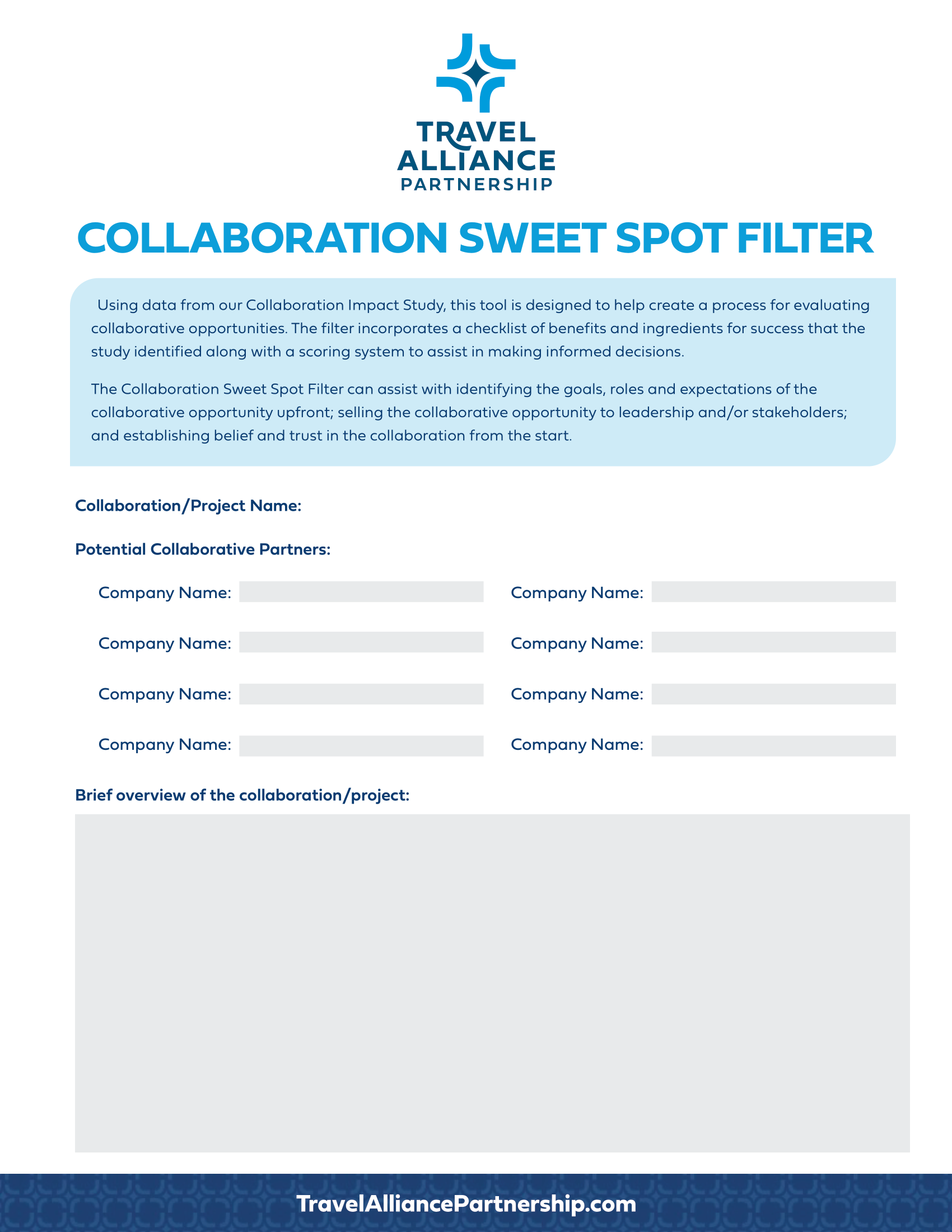
At TAP, we’ve developed a Collaboration Sweet Spot Filter to help organizations evaluate potential partnerships by considering both the opportunities and the ingredients needed for success. A consistent evaluation process makes it easier to prioritize partnerships with the greatest potential for mutual benefit.
3. Establish Clear Roles, Expectations, and Communication
A shared vision is important, but every successful collaboration also needs clarity about how the work will get done.
Who is responsible for what? What resources will each partner contribute? How will decisions be made? How often will partners communicate?
Our study found that 60% of organizations define roles and responsibilities for their collaborations. Documenting expectations early provides a foundation for accountability and helps partners work through challenges when they arise.
4. Allocate Resources and Develop Your Team
Collaboration requires time, expertise, and often financial investment. Yet fewer than half of our survey respondents (48%) reported allocating budget to support collaboration.
Consider what your organization needs to pursue partnerships effectively. That might include dedicated staff time, training, technology, or funding for joint initiatives. It also means empowering employees to identify potential partners and helping them develop the skills to manage collaborative relationships.
5. Measure Results and Refine Your Approach
Establish how you’ll define success before launching a collaboration. Your measures might include visitor growth, referrals, revenue, audience engagement, cost savings, or progress toward a shared community goal.
While 61% of survey respondents reported setting goals and tracking results, ongoing evaluation is just as important. Jennifer Barnwell’s approach at Curator is a good reminder that measuring success should be part of managing the partnership, not simply an exercise conducted when a project ends.
Schedule regular opportunities to review results, exchange feedback, and determine what needs to change.
Making Collaboration Part of How You Do Business
Operationalizing collaboration doesn’t mean creating unnecessary procedures or making every partnership more complicated. It means giving collaborative efforts the attention and support they need to succeed.
You don’t have to implement all five steps at once. Start by considering how your organization currently approaches collaboration. Are partnerships reflected in your strategic plan? Do you have a process for evaluating opportunities? Are responsibilities and measures of success clearly defined?
Our Collaboration Assessment can help you identify where your organization is already strong and where there is room to improve.
Choose one or two areas to strengthen. Over time, those improvements can help move collaboration from an occasional opportunity to a reliable driver of organizational success.
Author
Related Posts
From Transactional to Transformational: Rethinking Partnerships
Partnership is one of those words we use a lot in the travel and tourism industry. We have marketing partners. Community partners. Funding partners. Industry partners….
Why Collaboration Is No Longer Optional in Travel and Tourism
For years, collaboration has been an essential part of travel and tourism. In an industry that requires destinations, attractions, lodging and tour operators to work together to create travel product people will buy, collaboration simply happened naturally….
Collaboration Toolkit
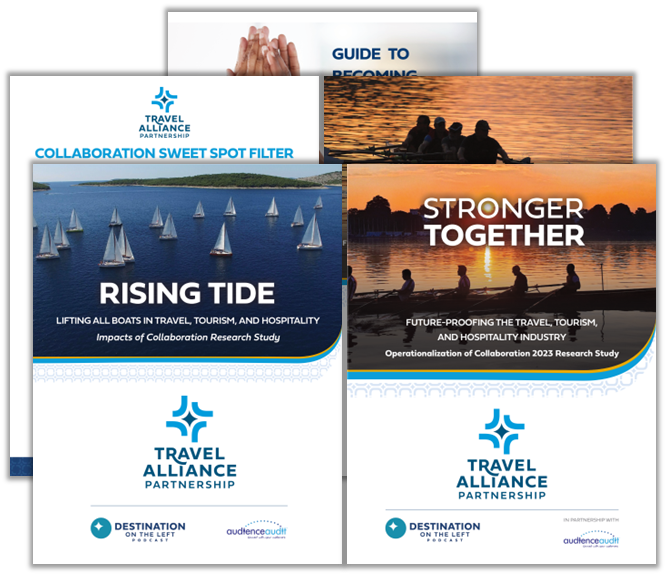
Our first research study confirmed that collaboration is a constant in the travel, tourism and hospitality industry. It is not a matter of if, but when and how, organizations will collaborate together. Our latest study reveals how organizations are putting collaboration into operation and how they are setting up systems and processes so that collaboration becomes a strategic part of the organization.
"*" indicates required fields