How Destinations Are Responding to Changing Meeting Planner Expectations
In our previous blog, How Meeting Planners Are Choosing Destinations Today, we explored how meeting planners are redefining destination selection around trust, transparency, safety and partnership, based on insights from a recent Meeting Planners Webinar hosted by Future Partners, Miles Partnership and Informa Connect.
This session also explored how destinations are evolving to meet these changing planner expectations: by focusing on clearer storytelling, stronger partnerships and more intentional attendee experiences.
Promotion alone no longer carries the same weight it once did. Increasingly, planners are looking for destinations that feel collaborative, prepared and aligned with the realities of modern meeting planning. That expectation is influencing everything from how destinations market themselves to how they support planners throughout the event lifecycle.
How Destinations Are Promoting Place, Purpose and Partnership
Planner expectations are changing, and in response, many destinations are focusing on place, purpose and partnership as ways to create more meaningful attendee experiences, build trust, and strengthen relationships throughout the planning process.
Place Is Becoming More Experiential
Convention centers still matter, but planners are increasingly looking beyond the ballroom. Offsite experiences, walkable downtowns, cultural venues and locally curated moments are playing a much larger role in how destinations are evaluated. The latest Freeman Trends Report shows that while “less than half of attendees are experiencing a peak moment at an event, 85% of those that do are more likely to return.”
As attendee expectations evolve, planners are placing greater value on experiences that feel immersive and connected to the identity of the destination itself.
For destinations, this creates an opportunity to tell a broader story—one that extends beyond meeting space and hotel inventory.
Instead of focusing solely on where meetings happen, destinations are increasingly highlighting how attendees experience the city around them. That can include everything from local food and arts communities to community-driven experiences that make an event feel more rooted in place and more memorable long after attendees return home.
Purpose Is Showing Up in More Practical Ways
Purpose has become less about broad messaging and more about operational clarity. Safety, sustainability and preparedness are now deeply connected to trust and decision-making.
In response, many destinations are becoming more transparent about how they support events when plans shift, whether through contingency planning, clearer communication strategies or measurable sustainability practices.
Rather than relying on high-level messaging alone, destinations and venues are finding ways to operationalize sustainability through waste reduction efforts, reusable service ware programs, food recovery partnerships and more intentional event planning practices. Some are also incorporating local sourcing initiatives that connect events more directly to surrounding communities and businesses.
These efforts tend to resonate most when they are embedded into the attendee experience instead of presented as standalone initiatives. The result is a version of purpose that feels less performative and more actionable.
Partnerships Are Becoming a Differentiator
One of the strongest themes to emerge from recent industry conversations is the growing importance of partnership, and the meeting planner market is no exception.
DMOs are increasingly acting as connectors between hotels, venues, local businesses and community stakeholders, helping planners navigate what has become a far more layered planning process. In some destinations, that support includes coordinating introductions across transportation providers, hospitality partners and local organizations early in the planning process to reduce friction and create a more collaborative experience.
That level of coordination becomes especially valuable when timelines shift or unexpected challenges arise. For planners, responsiveness and accessibility often carry just as much weight as the destination itself.
At the same time, partnerships are becoming more personal. Thoughtful communication, tailored recommendations and genuine relationship building continue to stand out in an environment saturated with templated outreach and automated messaging.
Word of mouth still carries enormous influence within the meetings industry. Destinations that foster advocates and trusted relationships often build credibility faster than those relying solely on traditional promotion because planners continue to place significant value on peer recommendations and firsthand experiences.
Using Technology to Engage Meeting Planners
Technology is being used to support the human connection, and it’s changing how destinations engage planners, particularly during the early stages of discovery.
Some destinations are experimenting with AI-powered itinerary builders, interactive venue exploration tools and virtual walkthroughs that help planners evaluate spaces before ever visiting in person. Others are rethinking how their websites function altogether, moving toward more story-driven digital experiences that feel closer to conversation than navigation.
In many cases, the goal is not simply to provide information, but to help planners envision what an event could actually feel like in that destination. As always, the human element remains essential. Technology may accelerate curiosity, but relationships still create confidence.
The destinations resonating most strongly with planners are often the ones using digital tools to support connection rather than replace it.
Collaboration Is Shaping the Future of Meetings
What emerges most clearly from these conversations is that destinations and planners are navigating the same uncertainty together.
Delivering on place, purpose and partnership is less about reinventing destination marketing and more about responding to what planners value most right now: experiences that feel intentional, communication that feels transparent and partnerships that feel genuine.
As planner expectations continue to evolve, the destinations that stand out will likely be those that view themselves not simply as hosts, but as collaborators in creating meaningful meeting experiences.
Author
Related Posts
Data-Driven Decision Making in Tourism
Tourism organizations have more information at their fingertips than ever before. Website analytics, visitor surveys, spending data, online reviews, and economic impact reports can all…
How to Turn Destination Stewardship Into a Visitor Experience
When we discuss destination stewardship, it often starts behind the scenes, with a focus on protecting natural resources, preserving cultural traditions, supporting residents, and thinking…
Collaboration Toolkit
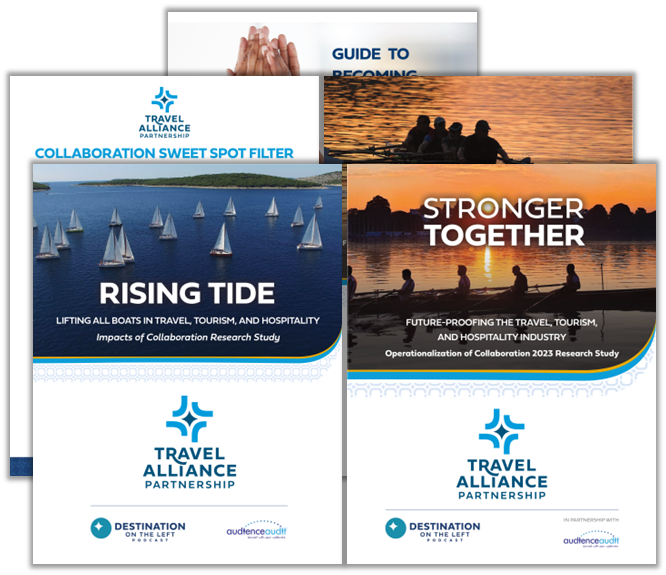
Our first research study confirmed that collaboration is a constant in the travel, tourism and hospitality industry. It is not a matter of if, but when and how, organizations will collaborate together. Our latest study reveals how organizations are putting collaboration into operation and how they are setting up systems and processes so that collaboration becomes a strategic part of the organization.
"*" indicates required fields