Mapping the Travel Customer Journey
Most tourism marketers I know have an almost innate grasp of the unique ways the traveler’s mind works. Maybe it’s because they paid attention to how they handle their own bookings, on top of years of experience talking with visitors coming through their area. Maybe it’s through education and maybe they’ve studied the travel customer journey themselves.
Here’s what savvy tourism marketers know: travel is different from most purchases. Because people buy into experiences differently than they buy groceries or gadgets or clothes. Where the standard customer journey falls short of mapping the travel purchase process is not only how people move through the stages, but what they are doing and feeling in each stage. A traveler isn’t just weighing price or convenience. They’re imagining who they’ll be with, how they’ll spend their time, what the trip will feel like, and whether the experience will be worth the effort.
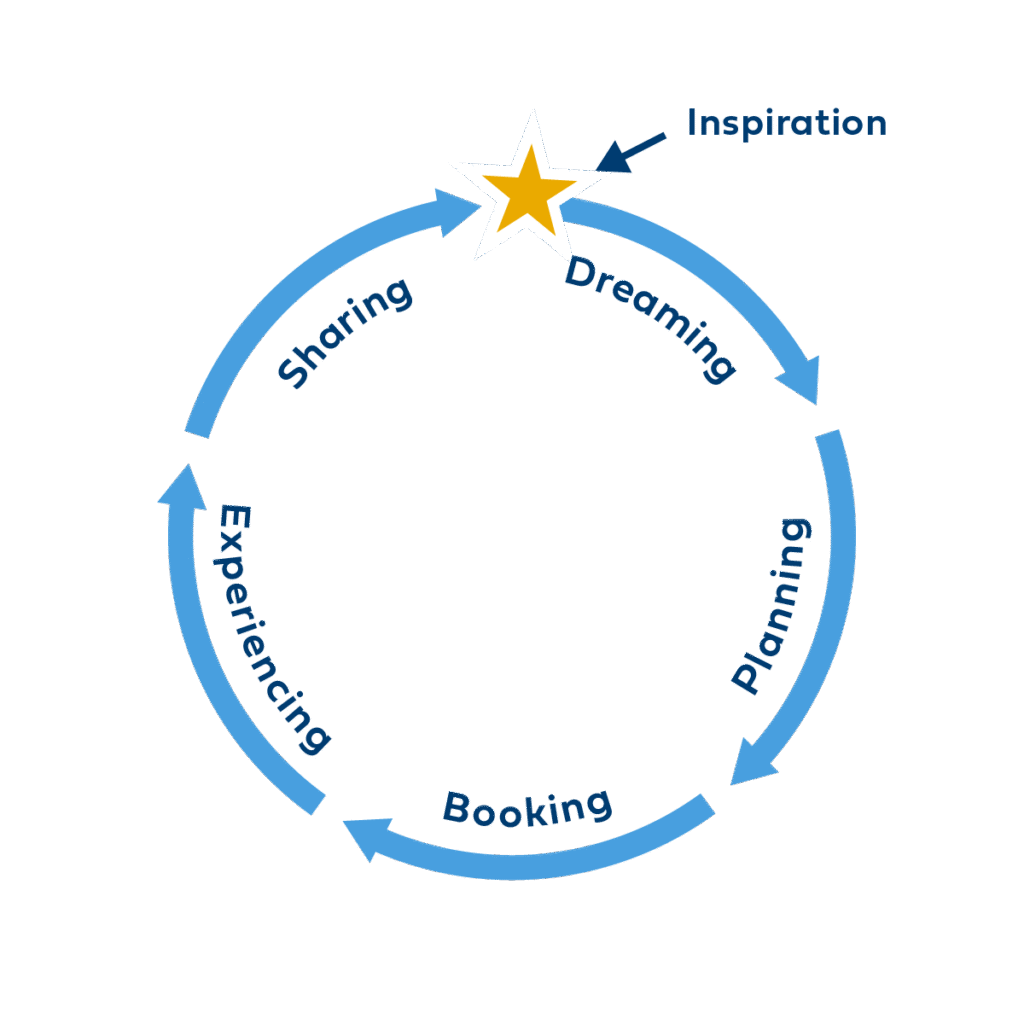
The decision to pack a suitcase and visit somewhere else is one that unfolds over time through inspiration, dreaming, planning, booking, experiencing, and sharing. Understanding the full travel customer journey helps tourism organizations influence decisions long before conversion happens.
Quick answer: The travel customer journey is the process travelers move through from the moment they’re inspired to take a trip until they share their experiences afterward.
Why the Traditional Customer Journey Falls Short in Tourism
Travel Is an Experience, Not a Transaction
The traditional customer journey typically starts with awareness, then moves on to consideration and then purchase, delivery and loyalty. These do line up with the travel customer journey in essence:
| Travel Customer Journey | Traditional Customer Journey |
| Inspiration & Dreaming | Awareness |
| Planning | Consideration |
| Booking | Purchase |
| Experience | Delivery |
| Sharing | Loyalty |
However, the travel customer journey reflects different motivations, behaviors, and emotional states than traditional purchase journeys. Even how each stage is named in the tourism version shows that travel decisions are highly emotional.
Whereas awareness simply means the customer knows you exist, in dreaming, they picture themselves in a place. While consideration feels like weighing options, planning is about how they’ll spend their time and discovering all the options.
This model reflects how travelers actually make their decisions, and in using it, tourism marketers are better equipped to find them and influence those decisions.
While the traditional customer journey focuses on moving consumers toward a transaction, the travel customer journey reflects the emotional and experiential process travelers move through before, during, and after a trip.
The Six Stages of the Travel Customer Journey
Understanding the travel customer journey becomes easier when we look at each stage individually. While travelers don’t always move through the journey in a perfectly linear fashion, each stage represents a different mindset and presents different opportunities for tourism marketers to influence decisions.
Inspiration
Inspiration is the moment the travel customer journey begins.
A traveler may not know where they want to go yet, or even when they want to travel. They simply become open to the idea of taking a trip. That spark can come from almost anywhere: a social media post, a travel article, a recommendation from a friend, a television show, an advertisement, or even a memory from a previous visit.
At this stage, travelers aren’t actively researching destinations or comparing accommodations. They’re gathering ideas, often without realizing it. The goal for tourism marketers is not necessarily to drive an immediate booking, but to create awareness and plant a seed that may influence future decisions.
This is why destination storytelling is so important. Effective inspiration-stage marketing helps potential visitors imagine possibilities before they’ve started making plans. Through compelling imagery, authentic experiences, and memorable stories, tourism organizations can position themselves as part of a traveler’s consideration set long before they begin actively planning a trip.
Because inspiration happens so early in the travel customer journey, it can also be one of the most difficult stages to measure. However, it often has an outsized impact on everything that follows. If a destination, attraction, or experience never enters a traveler’s mind in the first place, it won’t make it into the dreaming, planning, or booking stages later on.
Dreaming
Inspiration is the spark, and dreaming is where travelers begin exploring the possibilities.
At this stage, they’ve moved beyond the general idea of taking a trip and started imagining what that trip could look like. They may be comparing destinations, saving ideas on social media, reading travel blogs, watching videos, all to build a wishlist of experiences they’d like to have.
Learn more: Destination Decisions Study Report 2026 from Future Partners & Miles Partnership
Unlike the inspiration point, where travelers are often passive consumers of content, dreaming is more active. They’re seeking out information, although they’re not necessarily ready to make decisions. Instead, they’re asking questions like: “Where should we go?” “What kind of experience do we want?” “Which destinations fit the trip we’re imagining?” “What can we do there?” “Where might we stay?”
For tourism marketers, this is an opportunity to help travelers envision themselves in a place. The most effective content at this stage goes beyond listing attractions or amenities. It tells a story about what the experience feels like and helps visitors picture themselves creating memories there.
This is also where tour companies, destinations and attractions begin competing for attention. A traveler may be considering several options simultaneously, weighing everything from scenery and activities to atmosphere and accessibility. The destinations and businesses that provide compelling inspiration, helpful information, and a clear sense of place are often the ones that make it into the next stage of the journey.
While a booking may still be weeks or months away, the dreaming stage is where preferences start to take shape. For many travelers, the destination they eventually choose is influenced long before they ever begin comparing prices or making reservations.
Planning
The planning stage begins when travelers start turning possibilities into an actual trip.
By this point, they’ve chosen a destination and narrowed their activity options significantly. Now they’re focused on the details. Where will they stay? How will they get there? What attractions, restaurants, events, and activities should make it onto the final itinerary?
This is where travelers become highly engaged researchers. They compare accommodations, browse attraction websites, search for things to do, check operating hours, review maps, and look for practical information that helps them feel confident in their decisions. Planning is where the excitement of dreaming meets the realities of logistics.
For tourism marketers, the goal at this stage is to remove friction and build confidence. Helpful content can make the difference between a traveler moving forward with their plans or becoming overwhelmed by choices. Sample itineraries, trip-planning guides, event calendars, visitor information, FAQs, and local recommendations all help travelers feel prepared and informed.
Planning is also where partnerships across the tourism ecosystem become especially valuable. Visitors rarely experience a destination through a single business or organization, or within county lines. They piece together accommodations, attractions, restaurants, tours, transportation, and events into one cohesive trip that makes the most sense for what they want. The easier destinations make it for travelers to discover and connect those experiences, the easier it becomes for visitors to move toward booking.
While planning may seem practical on the surface, emotion still plays an important role. Travelers are imagining how they’ll spend their time, who they’ll spend it with, and what memories they’ll create. The organizations that help travelers answer those questions often earn a place in the final itinerary.
Booking
Booking is the stage of the travel customer journey where intention becomes commitment.
Now travelers are finally ready to make decisions. They reserve accommodations, purchase attraction tickets, book tours, secure transportation, and begin locking pieces of their trip into place.
For tourism marketers, this is often the easiest stage to focus on because it’s where conversions happen. Marketing performance measures bookings, ticket sales, reservations, and other tangible outcomes. Those metrics are important, but it’s also important to remember that the booking itself is often the result of weeks or even months of influence from earlier stages in the journey.
At this point, travelers want reassurance that they’re making the right decision. Clear pricing, strong calls to action, easy booking processes, and readily available information all help reduce hesitation and move travelers across the finish line. Even small obstacles, such as confusing websites or unanswered questions, can create enough friction to delay or derail a booking. Or motivate them to go elsewhere.
It’s also worth remembering that not every tourism organization owns the booking process. Many destination marketing organizations, for example, influence visitation without directly processing reservations or transactions. Their role is often to help travelers discover experiences, build itineraries, and connect with local businesses that ultimately convert that interest into bookings.
Experiencing
The experiencing stage begins the moment the travelers carry out their packed bags and lock the door behind them.
While they travel, visitors continue making decisions throughout their trip. They search for restaurants, discover attractions, look for nearby events, seek recommendations, and often make spontaneous choices that shape their overall experience.
In fact, some of the most valuable tourism marketing happens while visitors are already in-market. A traveler searching for “things to do near me” may discover an attraction they hadn’t planned to visit. A recommendation from a hotel concierge could lead to an unexpected tour booking. A social media post highlighting a local event might inspire a same-day visit.
For tourism organizations, the goal during the experiencing stage is to enhance the visitor experience and help travelers make the most of their time. Visitor guides, event calendars, maps, mobile-friendly websites, local recommendations, and location-based marketing can all play an important role in helping visitors discover what a destination has to offer.
The experiencing stage also presents an opportunity to strengthen visitor satisfaction. When travelers have positive, memorable experiences, they’re more likely to stay longer, spend more, leave favorable reviews, and recommend the destination to others.
Most importantly, the quality of the experience directly influences what happens next. The stories visitors tell after they return home are shaped by the moments they have while they’re there, making the experiencing stage a critical bridge to the final stage of the journey: sharing.
Sharing
The sharing stage is where the travel customer journey comes full circle.
After returning home, travelers savor their favorite experiences and begin sharing them with others. They post photos and videos, write reviews, recommend places to friends and family, and recount stories from their trip. In doing so, they become some of the most influential marketers a destination or business could ask for.
Unlike traditional customer journeys, where loyalty is often measured through repeat purchases, sharing in tourism has the power to influence entirely new travelers. A single social media post can inspire someone to start dreaming about a destination. A positive review can give another traveler the confidence to book. The experiences of one visitor often fuel travel decisions for many others.
For tourism marketers, the goal is not simply to encourage visitors to post about their trips. It’s to create experiences worth sharing in the first place. Exceptional service, memorable moments, unique attractions, and meaningful connections all contribute to the stories travelers choose to tell after they return home.
Sharing also creates opportunities to build long-term relationships with visitors. Staying connected through email marketing, social media, and other channels can help keep a destination top of mind for future trips. Just like in any business, repeat visitation is more cost-effective than attracting first-time visitors. And bringing people back again and again is a key piece of economic development. First a visitor, then a resident.
One Marketing Tactic Can Influence Multiple Stages
One of the biggest misconceptions about the travel customer journey is that every marketing tactic belongs to a single stage.
In reality, most tactics can support multiple stages depending on the audience, the message, and the timing. The channel itself matters less than the mindset of the traveler you’re trying to reach.
Ads Can Support More Than Booking
Advertising is often associated with conversion, but it can influence any part of the travel customer journey.
- An awareness campaign showcasing stunning destination imagery may help inspire future travelers.
- A campaign highlighting unique experiences can support the dreaming stage by helping visitors imagine themselves there.
- Attraction-focused ads may influence planning as travelers build itineraries.
- Booking-focused campaigns (and retargeting) can help convert travelers who are ready to commit.
Even after visitors arrive, advertising can continue shaping decisions. Mobile ads, search campaigns, and location-based marketing can introduce travelers to attractions, restaurants, events, and experiences they may not have otherwise discovered.
The tactic essentially stays the same but the objective changes based on where the traveler is in their journey.
Content Works Across the Entire Journey
As another example, let’s look at how content functions across the travel customer journey.
A blog article about a destination could inspire someone who has never considered visiting. The same article might help another traveler compare destinations during the dreaming stage. For someone already planning a trip, it may provide practical information that helps them build an itinerary.
Visitor guides, itineraries, event calendars, videos, social media posts, and email campaigns can all support multiple stages depending on how travelers engage with them.
The most effective tourism marketers consider traveler needs as they create. By understanding the questions visitors are asking at each stage of the journey, marketers can create content and campaigns that remain relevant from inspiration through sharing.
Go deeper: look at how SEO and AI search influence the customer journey
Meeting Travelers Where They Are
The travel customer journey provides a useful framework for understanding how travelers make decisions. More importantly, it helps tourism marketers think beyond individual tactics and focus on the needs, motivations, and questions travelers have at each stage of their journey.
Whether someone is just beginning to imagine their next trip or sharing memories after they return home, every interaction presents an opportunity to influence their experience. Organizations that understand the travel customer journey are better equipped to create relevant marketing, build stronger connections with visitors, and ultimately drive more meaningful results.
Related Posts
Data-Driven Decision Making in Tourism
Tourism organizations have more information at their fingertips than ever before. Website analytics, visitor surveys, spending data, online reviews, and economic impact reports can all…
How to Turn Destination Stewardship Into a Visitor Experience
When we discuss destination stewardship, it often starts behind the scenes, with a focus on protecting natural resources, preserving cultural traditions, supporting residents, and thinking…
Collaboration Toolkit
Our first research study confirmed that collaboration is a constant in the travel, tourism and hospitality industry. It is not a matter of if, but when and how, organizations will collaborate together. Our latest study reveals how organizations are putting collaboration into operation and how they are setting up systems and processes so that collaboration becomes a strategic part of the organization.
"*" indicates required fields